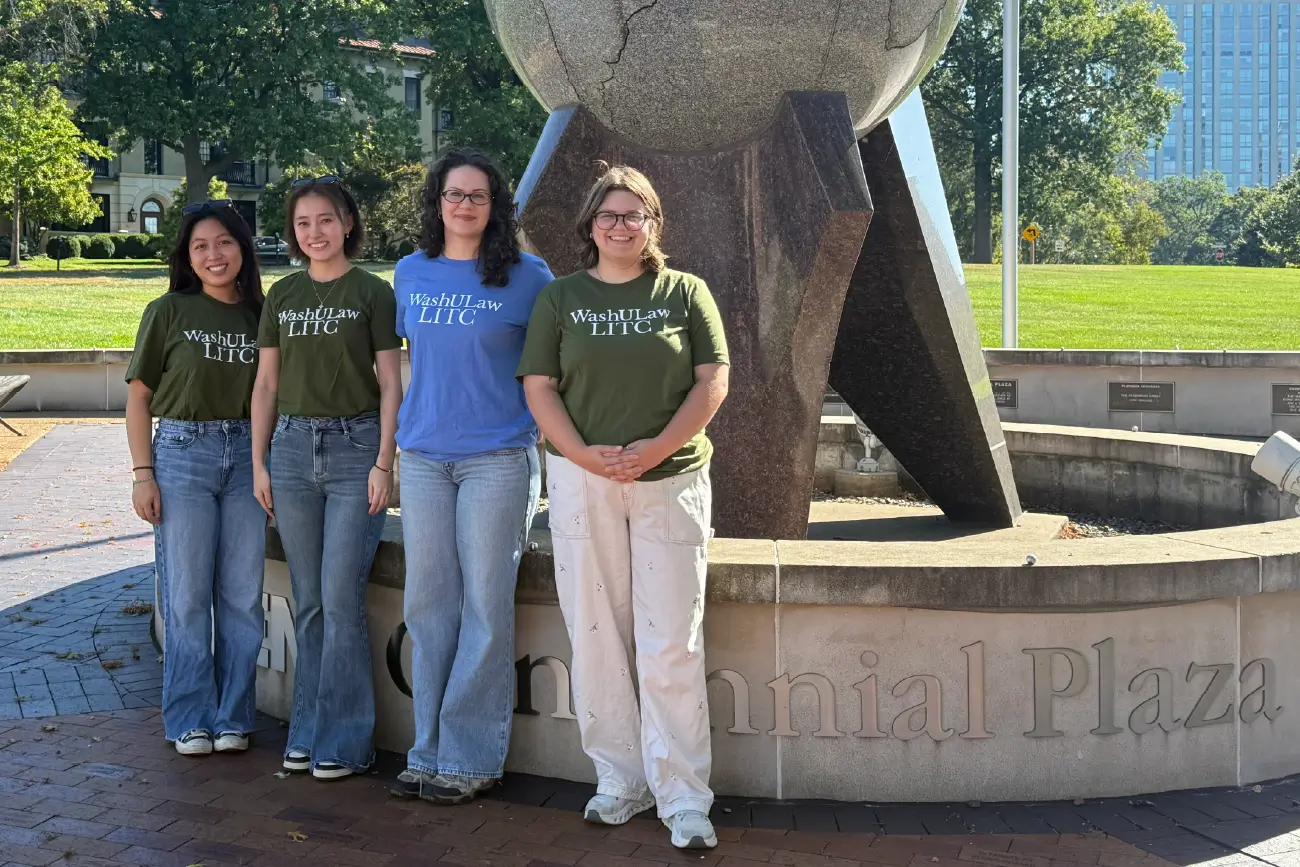
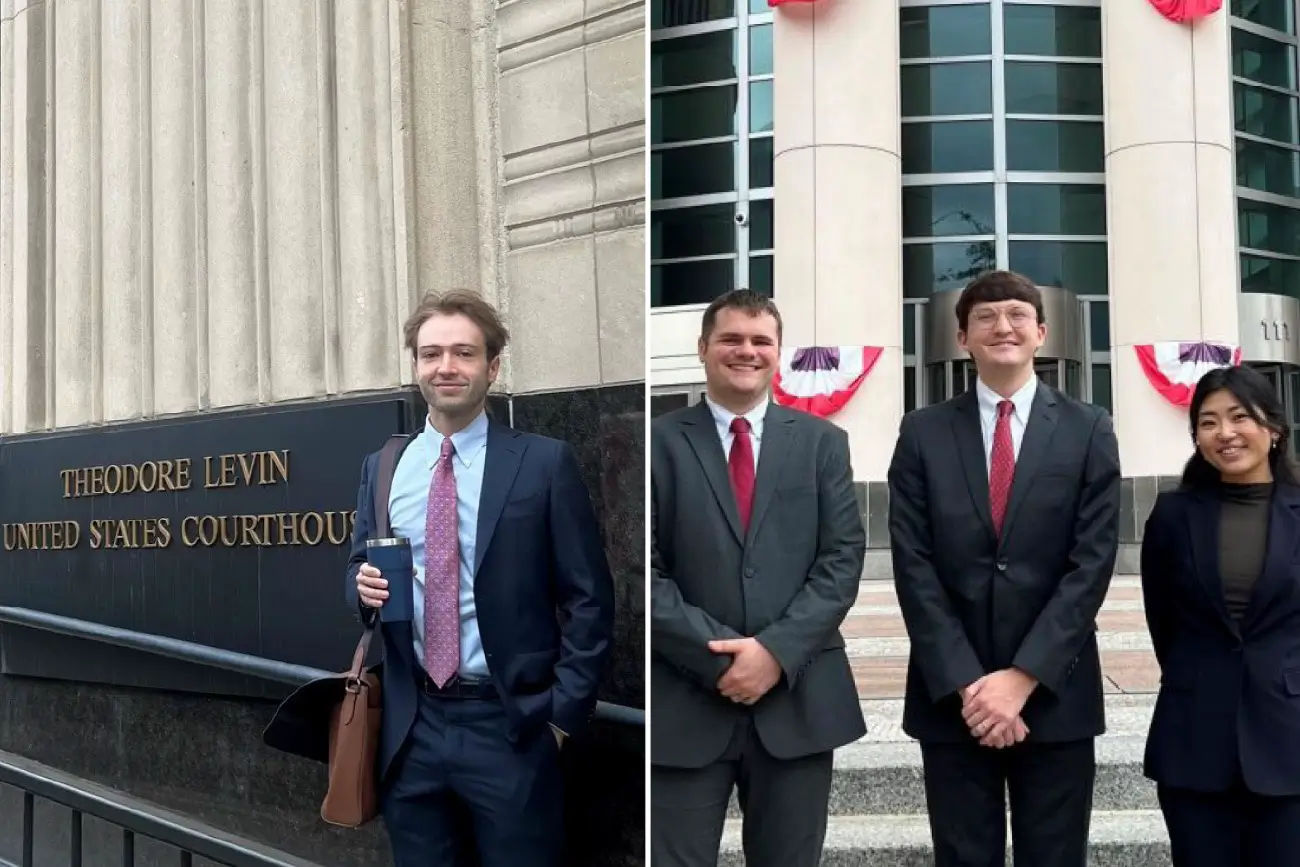
The Veterans Law Clinic had a busy and successful year. The Clinic continued its core practice of representing former service members and their families pursuing benefits and character of discharge determinations with the Department of Veterans Affairs (VA), discharge upgrades and records corrections at the service boards, and appealing VA decisions to the Court of Appeals for Veterans Claims (CAVC). The Clinic also routinely engaged with the St. Louis veteran community and collaborated with other veteran organizations seeking the best possible outcomes for veterans dealing with these processes.
St. Louis-Area Veteran Community Outreach
Clinic students attended events which provide resources and information to St. Louis-area veterans. Four Clinic students and the Clinic Director participated in “Stand Up / Stand Down” hosted at the St. Louis Soldiers Memorial Military Museum on September 26, 2026. The event focuses on assisting female veterans and veterans experiencing or at risk of homelessness. For four hours, Clinic personnel met with veterans, conducting intakes for potential clients and performing consultations for others. Similarly, a clinic student and the Director participated in the Veterans Resource Fair at Imperial, Missouri, on October 10, 2026.
Fort Leonard Wood Visit
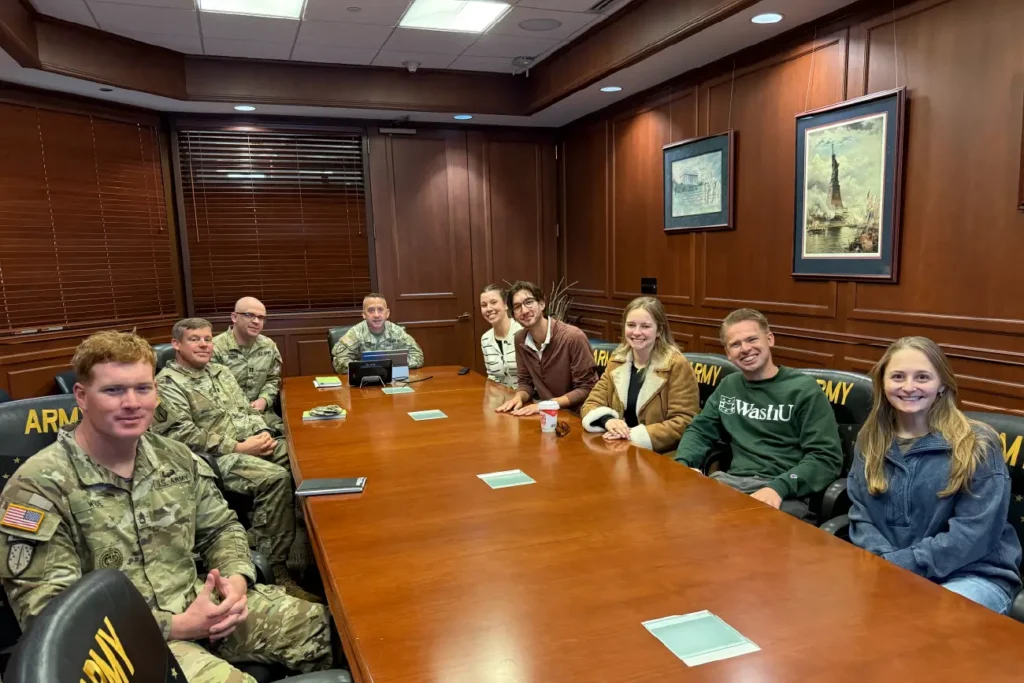
The Director and five Clinic students traveled to nearby Fort Leonard Wood, Missouri, on October 23, 2026. Fort Leonard Wood is a key training installation for the U.S. Army. In addition to managing the training for engineer, military police, and chemical military specialties, Fort Leonard Wood trains roughly 11,000 newly enlisted basic trainees every year, roughly 20% of the basic training mission. The Clinic students began their installation tour with a briefing from Colonel Jeremy Kerfoot, Chief of Staff for the Maneuver Support Center of Excellence and Fort Leonard Wood. Colonel Kerfoot outlined for the students the overall mission set for the installation and its subordinate commands.
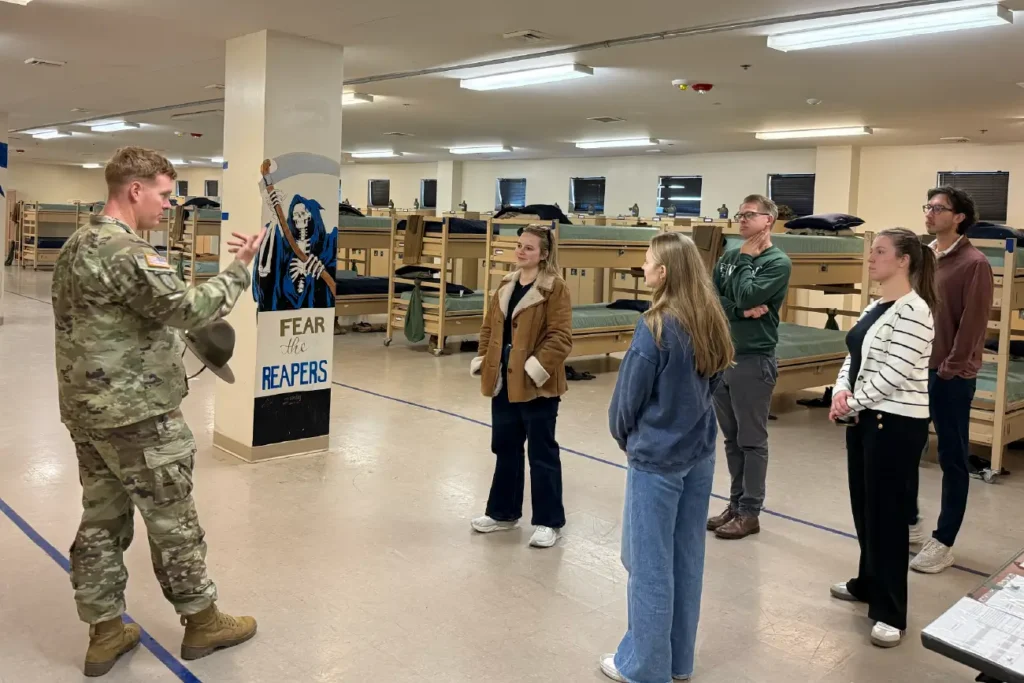
Next, Sergeant First Class Timothy Wode, Senior Drill Sergeant, Delta Company, 795th Military Police Battalion, gave the students a walkthrough of his company’s basic training area. Drill Sergeant Wode explained to the students the training cycle of a basic training unit. He described the basic training process in detail, explaining the experience from a trainee’s perspective and outlining the drill sergeants’ responsibilities and work cycle. Students witnessed garrison training activities from some of Delta Company’s adjacent units. The Clinic ate lunch at a basic training “DFAC” (Dining Facility), observing that even during meals the trainees must execute proper facing movements as they receive consistent “motivation” from the drill sergeants.
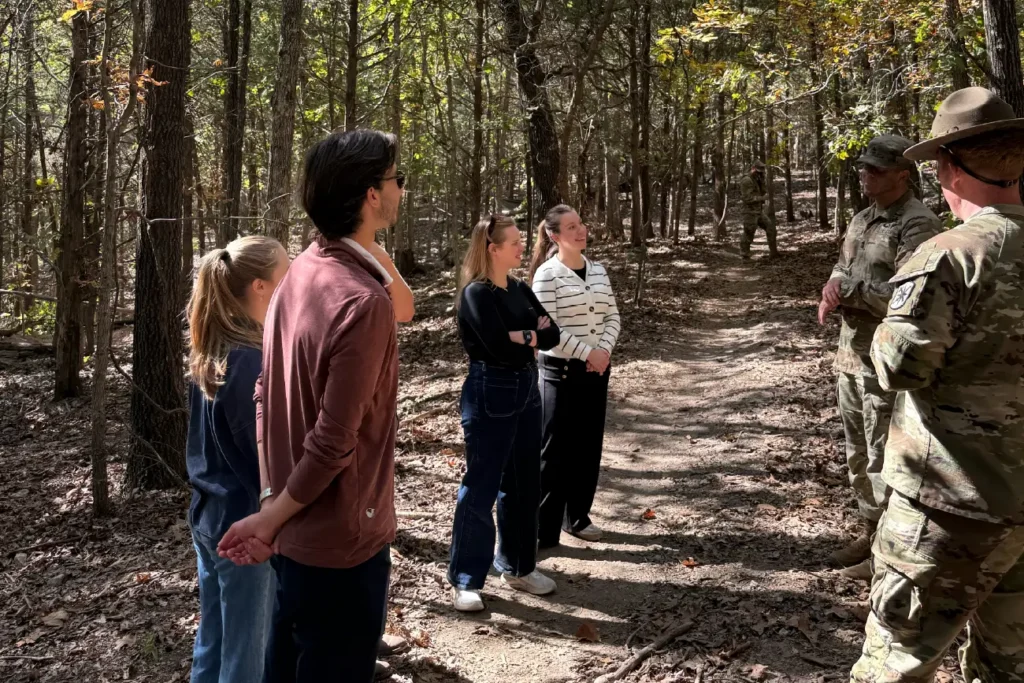
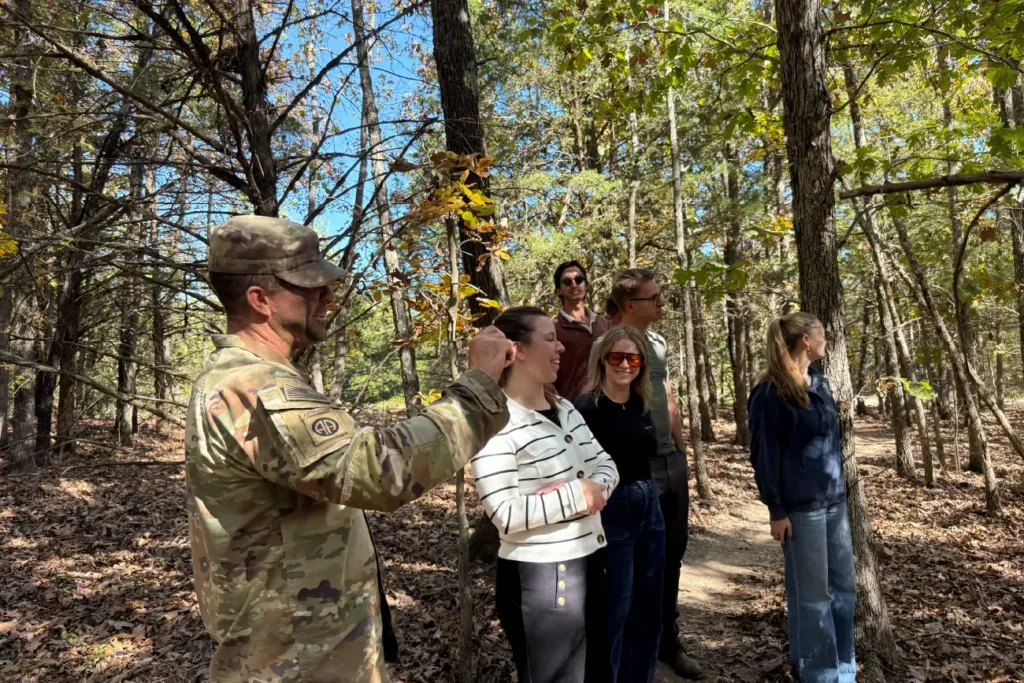
After lunch, the students joined Delta Company at its field training location. In the field, the basic trainees were learning how to conduct tactical military operations. Delta Company’s First Sergeant Dunn oriented the students to the fighting locations the trainees had built, explaining the purpose of this stage of the training and the skills the trainees were expected to gain from this phase of the course.
The Clinic’s Fort Leonard Wood tour concluded in the courtroom at the Office of the Staff Judge Advocate (the installation’s legal office). Fort Leonard Wood’s Staff Judge Advocate (general counsel) and two captains in his office briefed the students on aspects of U.S. Army legal practice within the Judge Advocate General’s (JAG) Corps.
Law School Veterans Clinic Training
The Clinic Director, Cormac Smith, presented at several veteran organization training events and conferences in the past year. He spoke to the Missouri Veterans Commission’s St. Louis Regional Meeting in December 2025, and he spoke at the organization’s statewide Missouri Veterans Commission Training Conference in April 2026. Cormac served on the Conference Committee for the National Law School Veterans Clinic Consortium (NLSVCC), and in that role he helped plan the NLSVCC’s first in-person conference in several years on June 4-5, 2026. Cormac also coordinated for and introduced one of the Keynote Speakers at the event, Regimental Command Sergeant Major (Retired) Pat Lister, Director of the Army Board for Correction of Military Records. Lastly, Cormac presented a teaching webinar for NLSVCC’s Education Committee on “Storytelling & Developing Case Theme and Theory” on October 1, 2026.
St. Louis County Veterans Court Visit
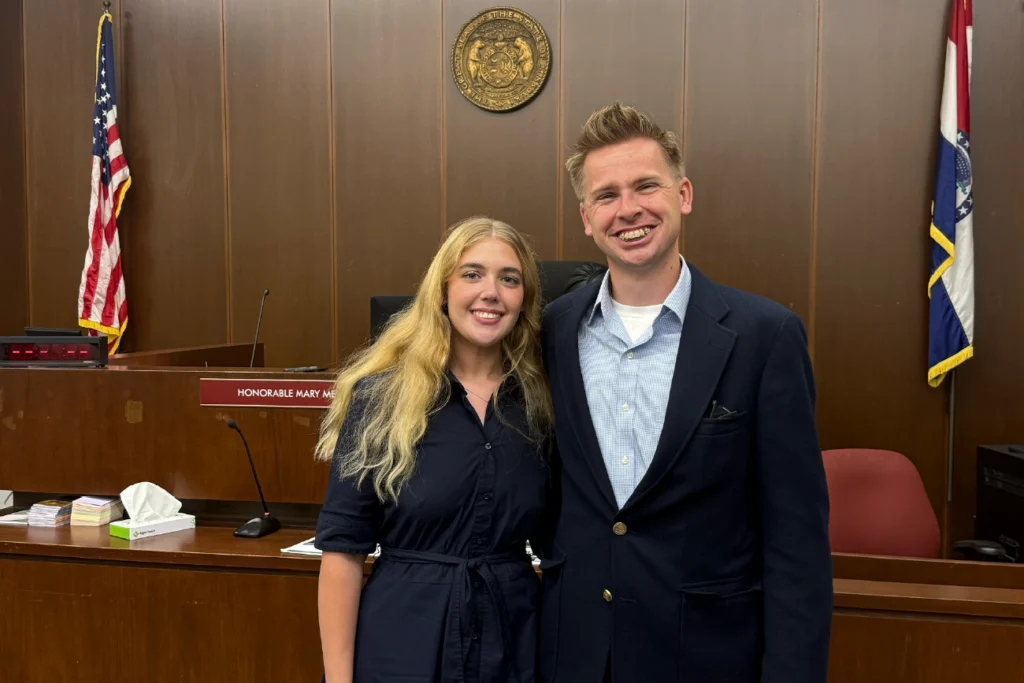
Seeking to expand the Clinic’s familiarity with issues veterans face in the St. Louis community, the Clinic Director and two students, Aaron Mansdoerfer and Emily Armour, visited the St. Louis County Veterans Court on September 15, 2026. The students met with the Veterans Court Commissioner, Mary Meyers, and observed the in-chambers staffing meeting with Commissioner Meyers, her court personnel, and various Veterans Court stakeholders. The students then attended the docket proceeding, observing the court in action. They were introduced to the veterans in attendance and gained valuable insight into how such treatment courts provide special assistance to veterans involved in the justice system.
National Personnel Records Center Visit
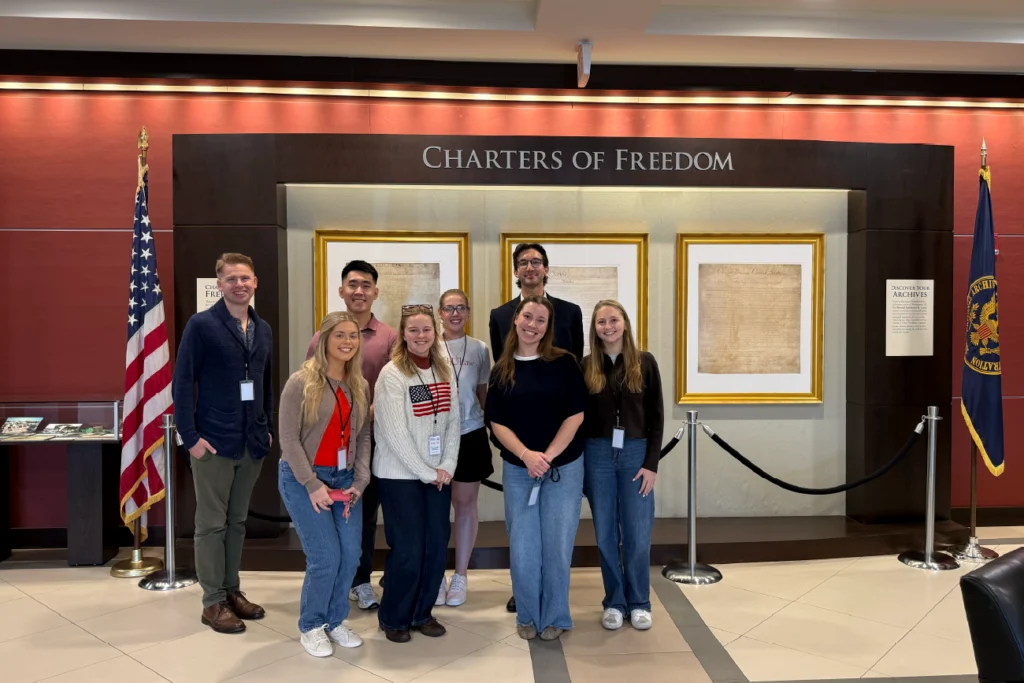
In the 2026 spring and fall semester the Clinic continued its tradition of visiting the National Personnel Records Center (NPRC) in St. Louis. The NPRC serves as the repository for military personnel records. Retrieving veteran clients’ military personnel records and medical treatment records is a critically important step in representation, and seeing the NPRC firsthand gives students valuable insight into archival processes.
Case Outcomes
The Veterans Law Clinic achieved several key wins for clients in the past year. Students successfully advocated for a client seeking Dependency and Indemnity Compensation (DIC) and healthcare funded by VA based upon the client’s father’s service in Vietnam. The Clinic achieved a discharge upgrade from Other Than Honorable to General (Under Honorable Conditions) for a client before the Board for Correction of Naval Records based upon evidence of the client’s mental health conditions. The Clinic successfully advocated for VA to find a veteran eligible for VA benefits despite an “Under Conditions Other Than Honorable” discharge characterization and an absence from service for close to 6 years based upon a valid legal defense to the alleged underlying misconduct. For two separate clients, students successfully secured 70% VA disability ratings of service-connected conditions, which equates to a monthly payment of nearly $2,000. Representation of one of those clients also uncovered over $71,000 in past-due benefits which was then paid to the client.
Oral Advocacy on Behalf of Clients
Clinic students presented oral advocacy in two cases this year. On December 10, 2025, clinic students Brian Roberts and Julia Canellis participated in a pre-brief conference in one of the Clinic’s Court of Appeals for Veterans Claims cases, Albater v. Collins, No. 25-4002. During the conference, which was mediated by court staff, the students engaged with opposing VA counsel seeking potential resolution of our client’s case before the Court. The students persuasively demonstrated VA’s error in determining that the client had insufficient wartime service for nonservice-connected pension, highlighting favorable evidence in the record and analyzing the Department of Defense’s Financial Management Regulation. VA’s attorney agreed that the Agency erred in its pension denial decision, and therefore VA joined the Clinic’s request for a new Agency decision rectifying the error.
On October 9, 2026, Abby McGowan and Aaron Mansdoerfer represented one of the clinic’s clients in his discharge upgrade petition at a video teleconference hearing before the Naval Discharge Review Board. Abby and Aaron superbly presented the case, questioning the client in a direct examination and outlining the key excerpts from a factual record which spanned well over a thousand pages. Aaron and Abby also presented the hearing’s opening statement and closing argument, persuasively explaining why equity demanded an upgrade of the client’s discharge characterization.