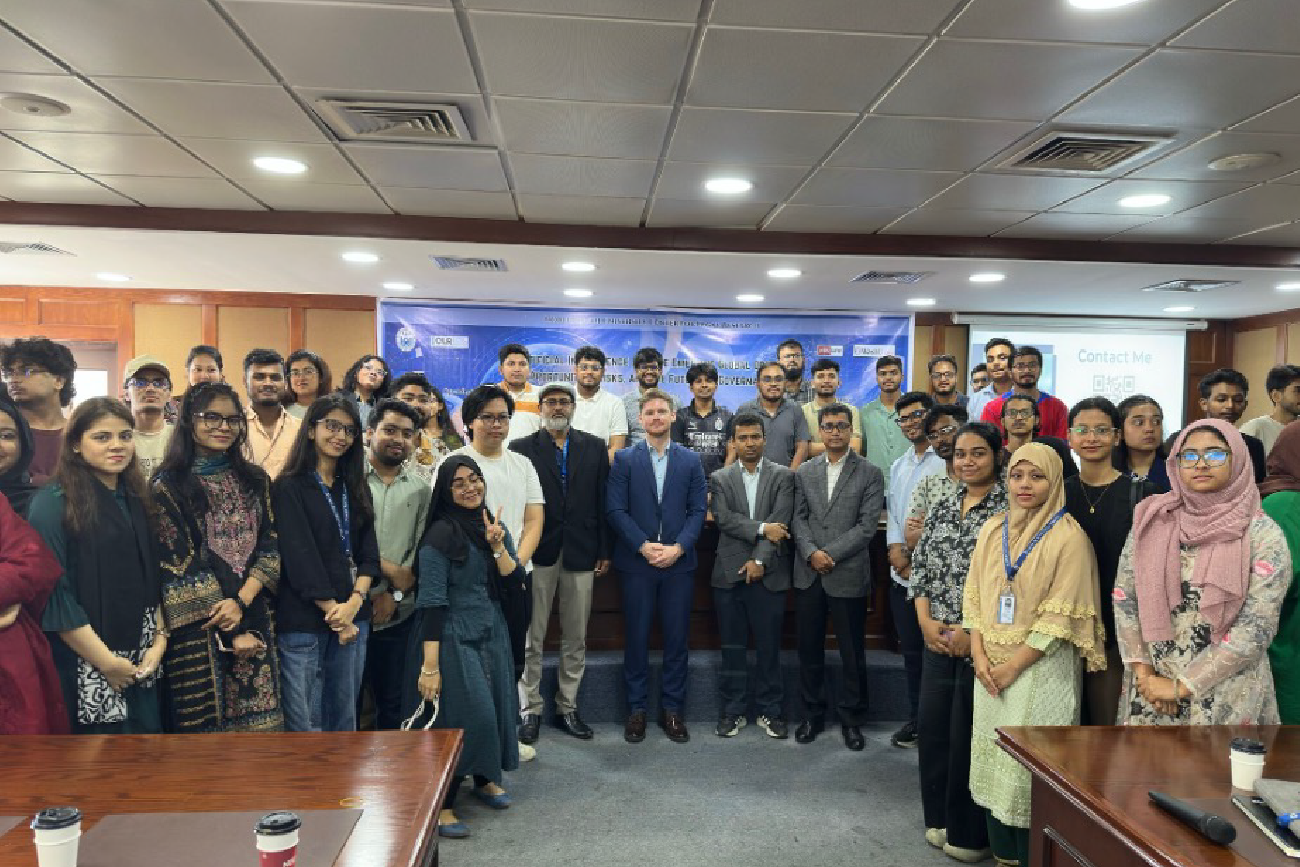
Oliver Roberts, Adjunct Professor of Law and Co-Director of the WashU Law AI Collaborative, visited Guyana this past week to deliver a lecture on artificial intelligence at the University of Guyana, the country’s flagship public university. The visit marks the first step toward a broader educational collaboration between the two institutions, including plans to introduce the country’s first AI and Law course in spring 2027.
The lecture examined the growing intersection of artificial intelligence, law, and public policy, covering topics ranging from AI regulation and emerging applications in legal practice to the ways AI is challenging established legal doctrines in copyright, product liability, privacy, and other areas of law.
“We were proud to partner with WashU Law on this guest lecture and look forward to expanding the partnership into the country’s first AI and Law course,” said Christopher Ram, longstanding Lecturer in Law at the University of Guyana.
Students and faculty participated actively throughout the program, raising questions about data sovereignty, data privacy, and the tension between existing copyright protections and the rapid development of generative AI technologies. The discussion also explored how countries such as Guyana can navigate the opportunities and legal challenges associated with AI adoption.
Along the lecture, Roberts met with University of Guyana faculty to discuss opportunities for continued collaboration and the development of a dedicated AI and Law course. The proposed program will allow students to engage with emerging legal and technological developments.
Student-Led Research Supports International AI Initiative
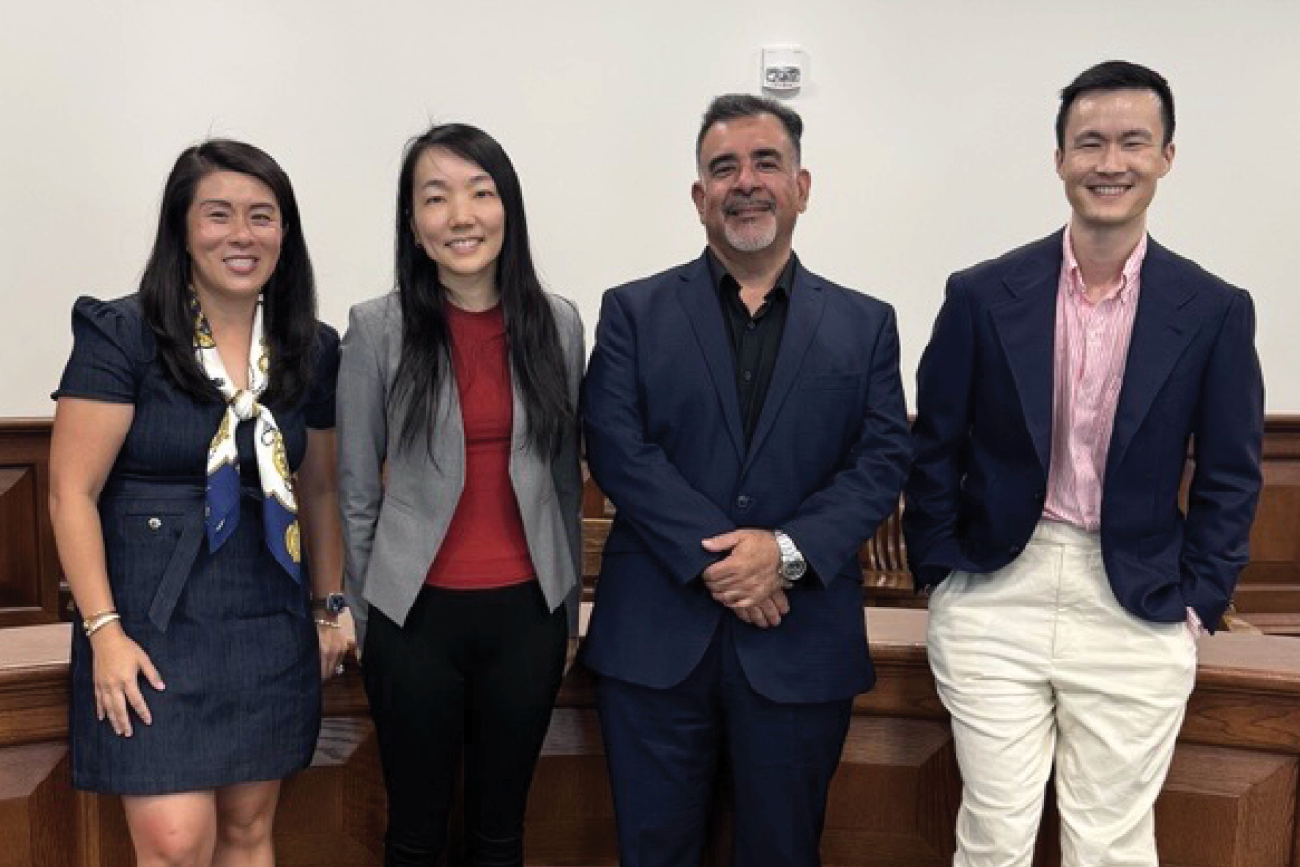
The visit was supported by student-led research conducted through the WashU Law AI Collaborative. Four WashU Law students, Fahad Albalawi, Sam Finer, Syed Ahmad Burney, and Jingyi Zhou, prepared a research briefing ahead of Roberts’ visit to Guyana.
The students examined Guyana’s legal system, judicial structure, emerging AI policies, and ongoing technology initiatives, with particular attention to opportunities for AI education and institutional collaboration. Their research provided background information to help prepare for discussions with University of Guyana faculty and other partners.
The project reflects the AI Collaborative’s commitment to engaging law students directly in its international initiatives, providing opportunities to conduct research on emerging legal and technological issues while supporting the expansion of AI education worldwide.
Part of WashU Law’s Expanding Global AI Education Initiative
The Guyana partnership builds on WashU Law’s broader international efforts to expand access to artificial intelligence education and promote responsible AI adoption across legal systems.
Through the WashU Law AI Collaborative, the law school has developed relationships with universities and law schools across Europe, Asia, Australia, and South America, including the University of Nottingham in the United Kingdom, Utrecht University in the Netherlands, Koç University in Türkiye, the University of Queensland in Australia, and Universidad de La Sabana in Colombia.
The initiative also builds on recent AI education programs in Tanzania. In August 2026, WashU Law partnered with the U.S. Embassy in Dar es Salaam and Wickard to deliver AI education and training, bringing together university students, faculty, legal professionals, and community leaders.
WashU Law has also expanded its AI education efforts in Bangladesh, where it presented to the country’s law minister and delivered a lecture at North South University. More recently, the U.S. Department of State invited Roberts to Egyptfor discussions on artificial intelligence with members of parliament and technology leaders.
Beyond international university partnerships, WashU Law has expanded its educational initiatives to courts, judges, and legal professionals. These efforts include specialized artificial intelligence training for judges of the District of Columbia Court of Appeals and AI education programs for state court judges in Pennsylvania.
The proposed University of Guyana program would further extend these efforts into the Caribbean and South America, creating opportunities for legal education that addresses both global developments in artificial intelligence and the particular challenges facing local legal systems.
As artificial intelligence continues to transform the legal profession, WashU Law’s growing international collaborations aim to ensure that law students, legal educators, and practitioners around the world have the knowledge and skills necessary to engage with these technologies effectively, critically, and responsibly.