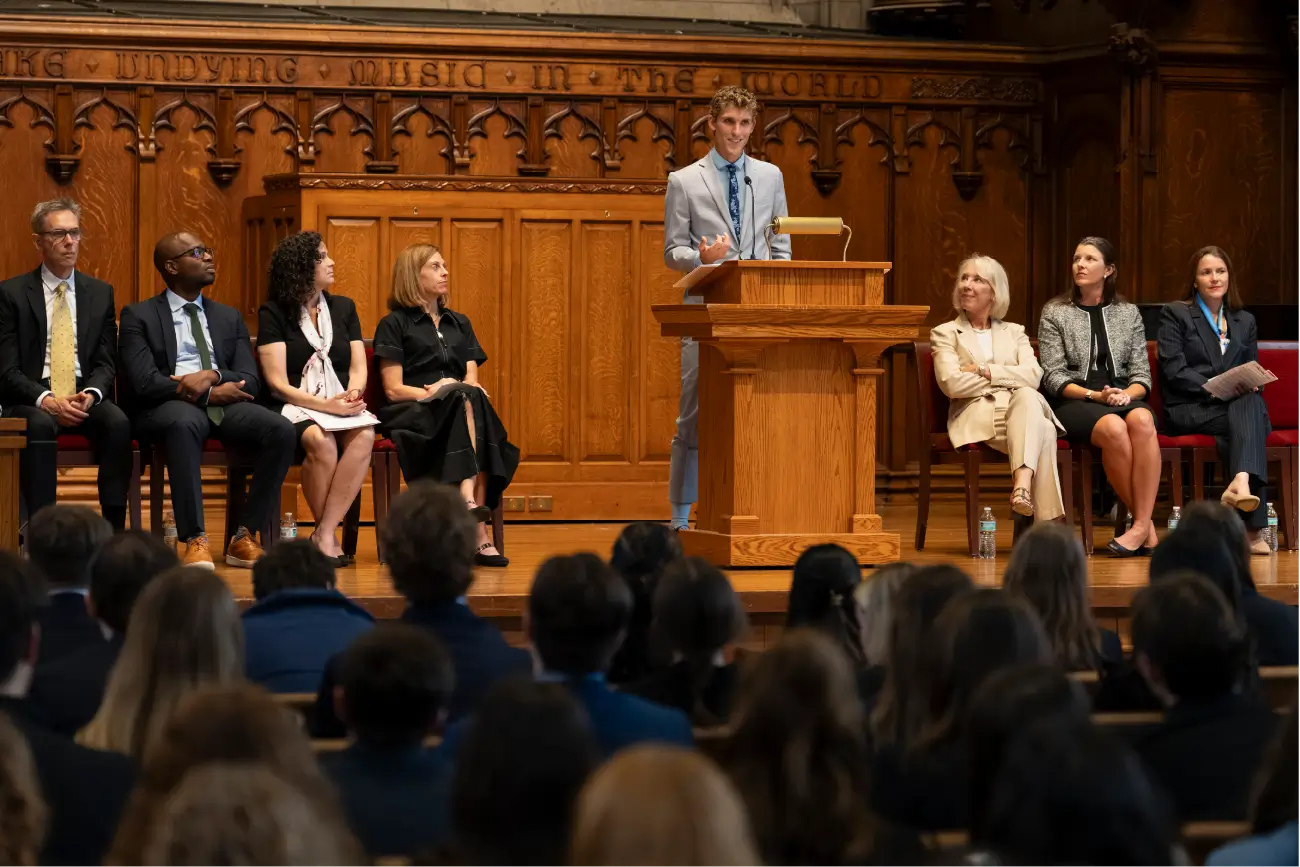
WashU Law hosted the second Model Constitutional Convention this past weekend, bringing together students from across the United States to take part in a transformative learning experience focused on the constitutional amendment process, civic engagement and dialogue, and democratic principles and procedures.
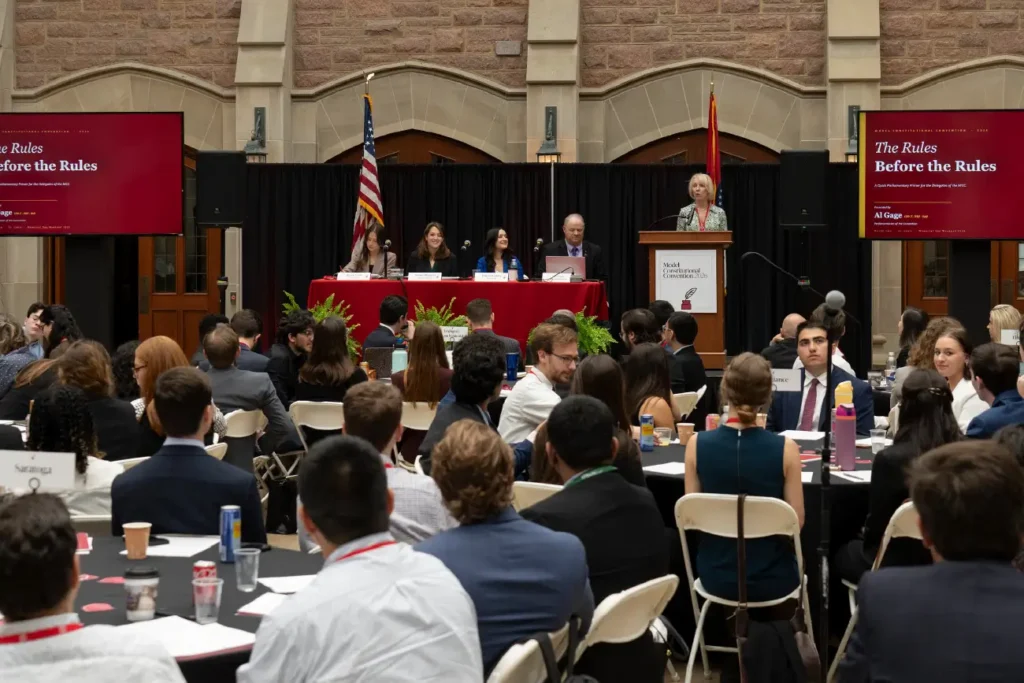
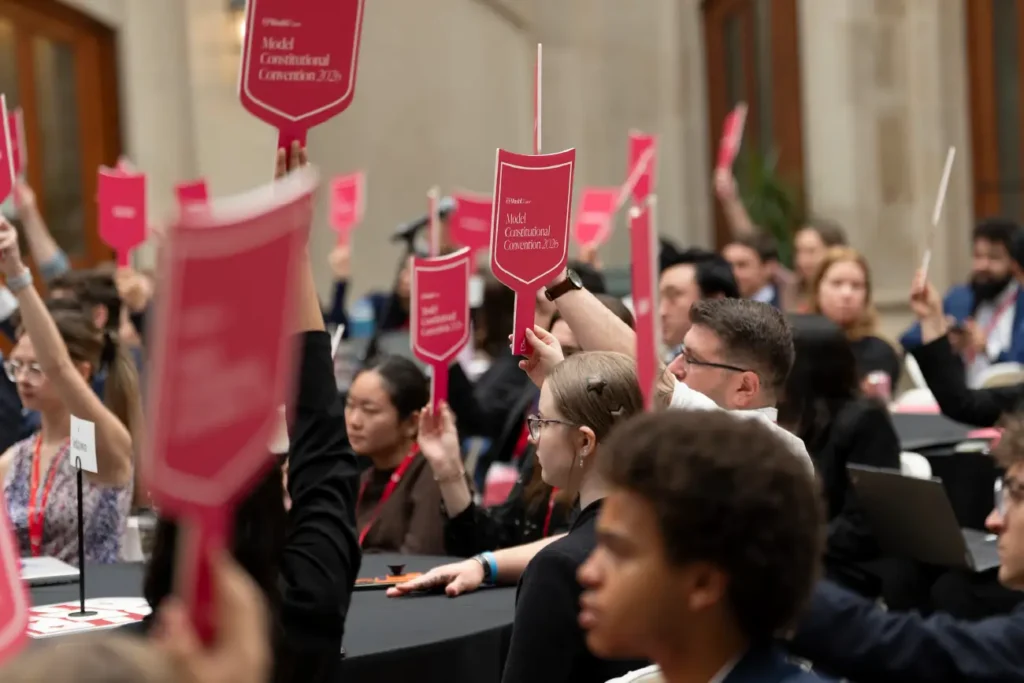
Modeled after the convention process described in Article V of the U.S. Constitution, the MCC was founded and piloted in 2024 by WashU Law Dean Stefanie Lindquist when she was on the faculty and directed the Center for Constitutional Design at ASU Sandra Day O’Connor School of Law. It simulates a national convention and is based on the premise that Congress has received support from two-thirds of the states to propose constitutional amendments. During the weekend, 100 delegates (2 per U.S. state) gathered to propose, debate, revise, and vote on amendments addressing contemporary legal and constitutional questions. Ultimately, students adopted six amendments covering various legal topics including digital privacy, gerrymandering, eminent domain, and civil rights, among others.
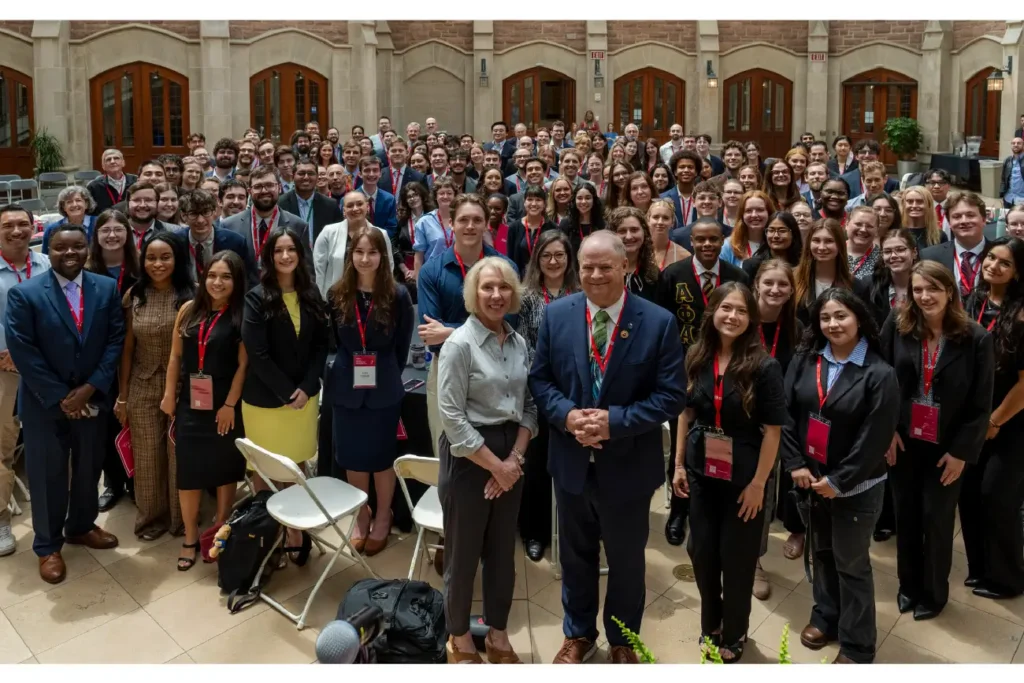
This year’s convention drew a diverse and wide-ranging group of participants. In total, 42 law students, 1 master’s student, and 64 undergraduates took part in the experience. Participants represented 79 unique institutions across the United States. Attendees also reflected a wide range of experience levels, with ages ranging from 18 to 50. Students participated in an online course prior to the Convention that gave them background on Roberts Rules of Order, the amendment process, and amendment drafting considerations. Nine students who had been student delegates at the first MCC (hosted by ASU School of Law) returned as peer mentors.
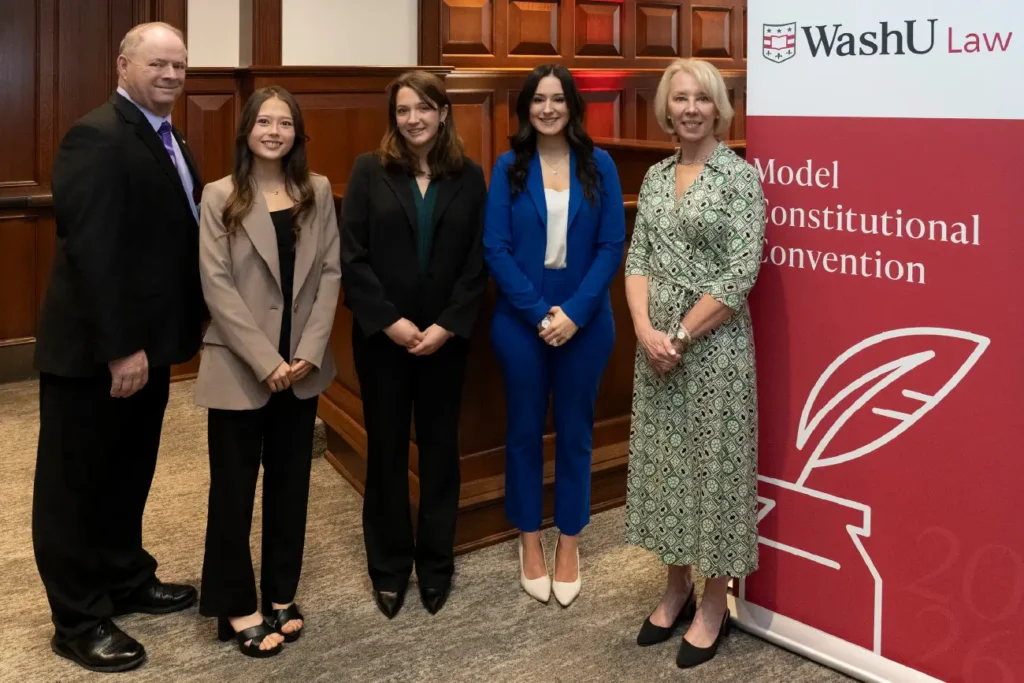
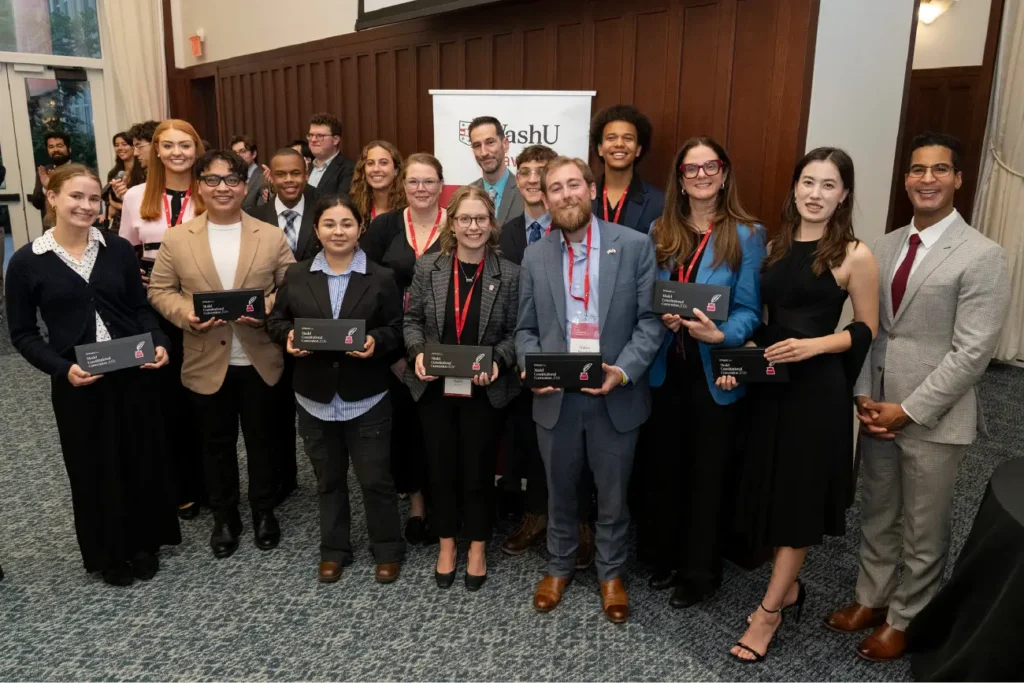
The weekend concluded with an award ceremony, recognizing participants for leadership, collaboration, and advocacy throughout the weekend.
The awards given were as follows:
Most Persuasive Orator:
Andy Beyer, Yale Law School
Aly Murphy, Ohio State University
Honorable Mentions:
Gabby Henry, Florida A & M University College of Law
Korey Wells, Pomona College
Most Effective Leader:
Jon Tostrud, University of Wisconsin – Madison
Honorable Mention:
Lauren Wright, Santa Clara University School of Law
Most Valuable Conciliator:
Brian Deisher, University of Wisconsin School of Law
Honorable Mentions:
Madeline Leonard, Clemson University
Members of the We the People committee received the award for Best Committee Performance. The Stars and Stripes committee earned honorable mention recognition for committee performance.
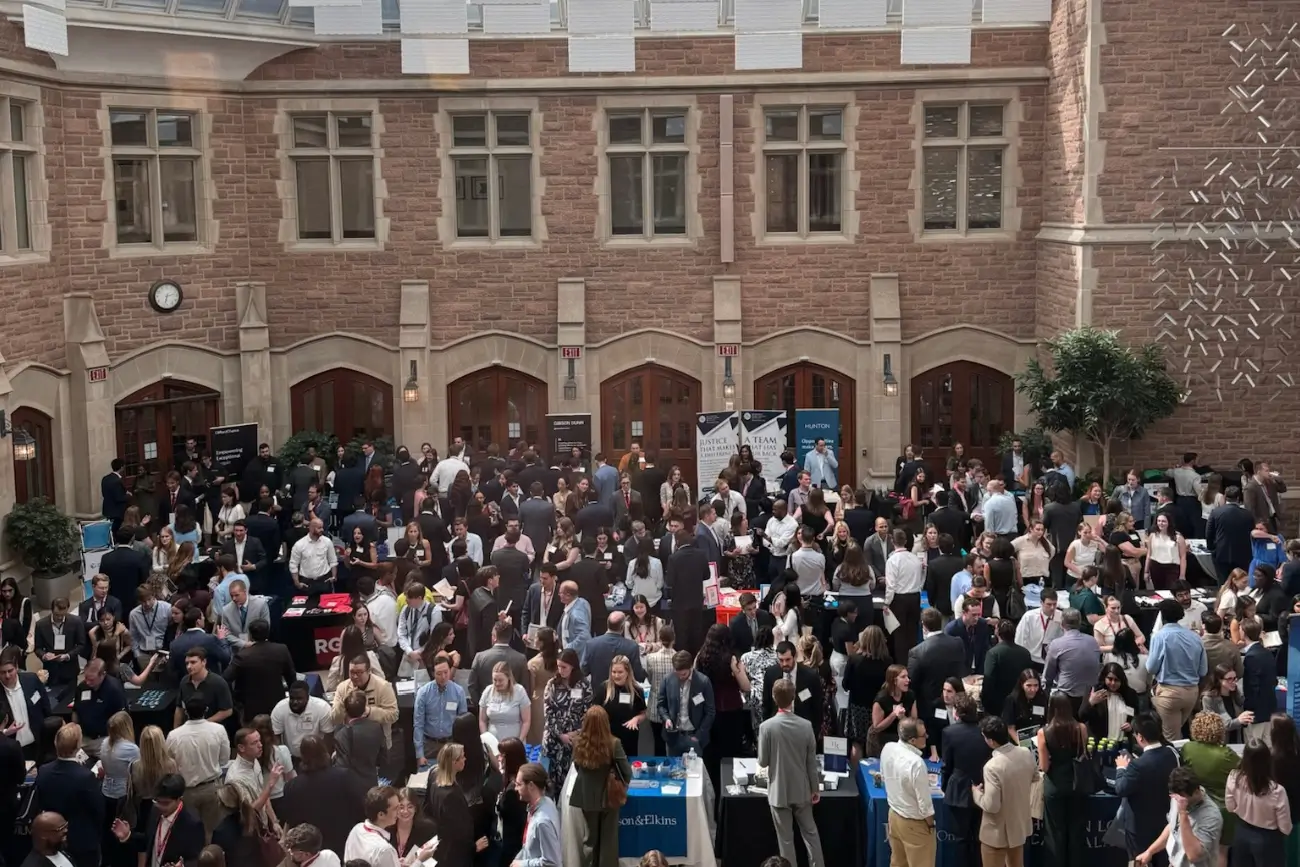
WashU Law extends its thanks to everyone who participated in this year’s convention and helped make the weekend a success. The energy, preparation, and engagement from attendees shaped meaningful conversations both inside and outside Crowder Courtyard.
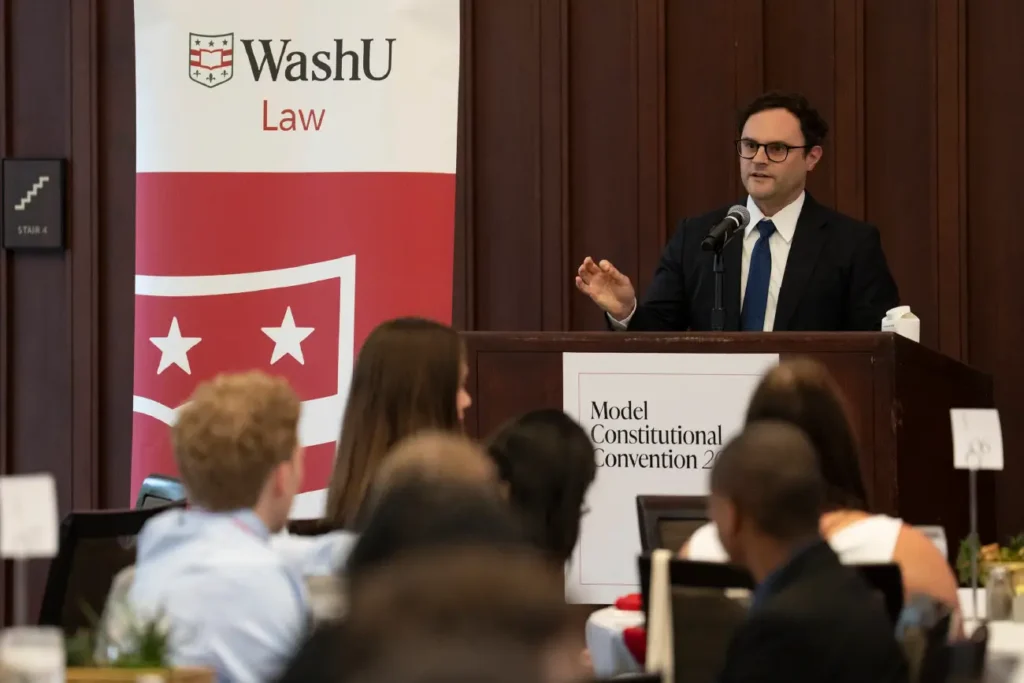
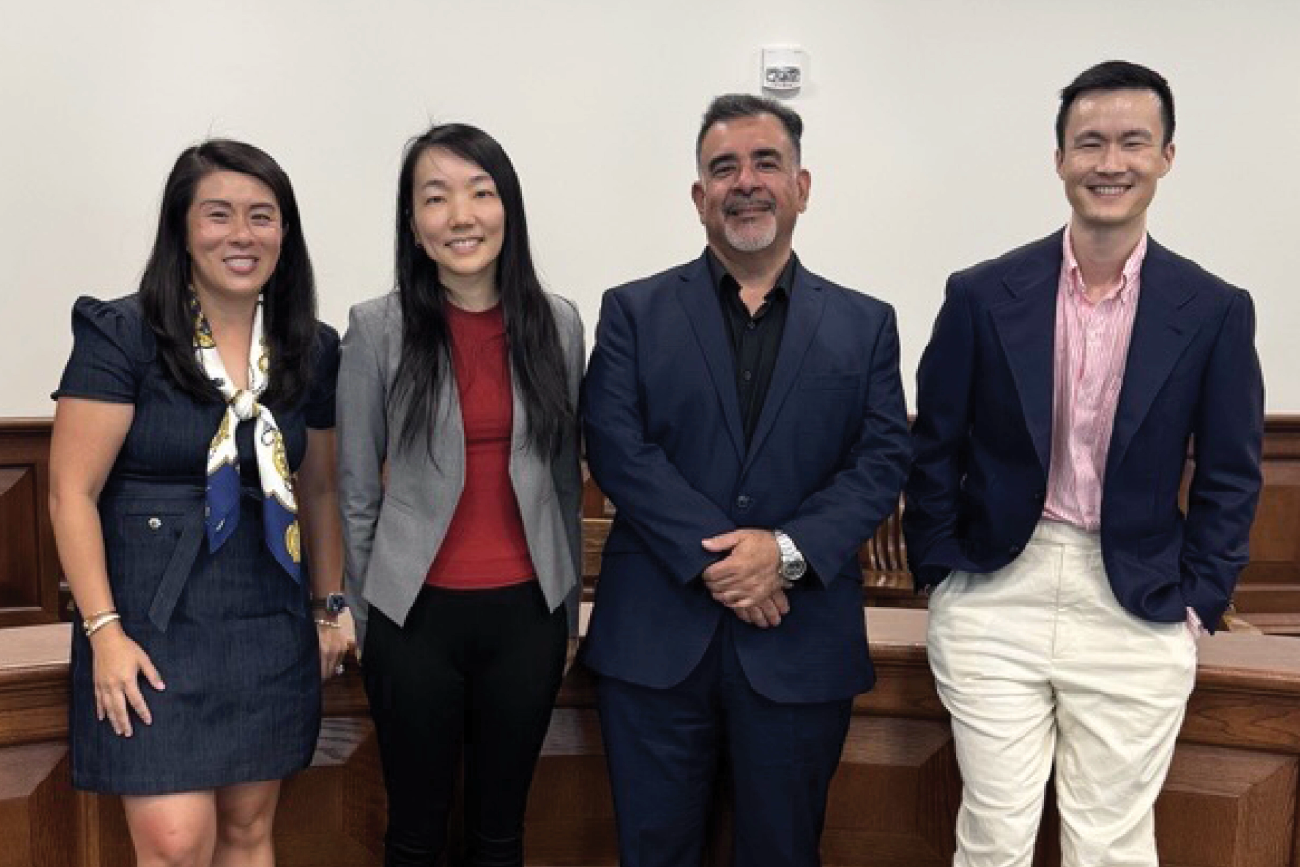
We are especially grateful to Peter Kastor, Associate Vice Dean of Research, Professor of History and American Culture Studies, and Professor of Law at WashU; Erwin Chemerinsky, Dean and Distinguished Professor of Law at UC Berkeley School of Law; Richard Albert, Professor of Law and Government and Director of Constitutional Studies at The University of Texas at Austin; and Justin Weinstein-Tull, Professor of Law and Co-Director of the Center of Constitutional Design at Arizona State University Sandra Day O’Connor College of Law, for sharing their expertise and perspectives throughout the weekend. Al Gage, CPP-T, PRP, PAP, a professional Parliamentarian, coached and guided students as they led convention proceedings.
We also want to recognize the convention student leaders: President Kalista Barkley, University of Idaho School of Law; Vice President Marin Ellington, University of Wisconsin School of Law; and Secretary KyLee Davis, an incoming WashU Law student, for their leadership and work throughout the weekend, in addition to all convention mentors who provided support to the committees.
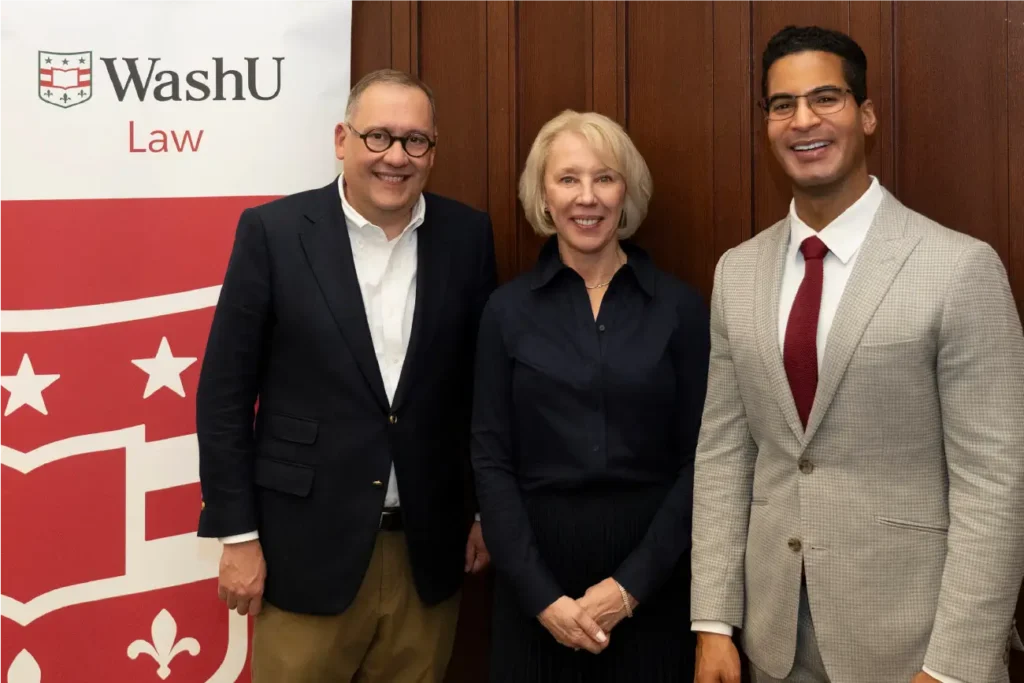
Special thanks to Chancellor Andrew D. Martin for his support of the Model Constitutional Convention and the WashU Law community.
We are also deeply grateful to the donors and sponsors—the John Storr Fund and the Frick Initiative of WashU Law—whose support helped make the convention possible and provided students with this unique learning opportunity.