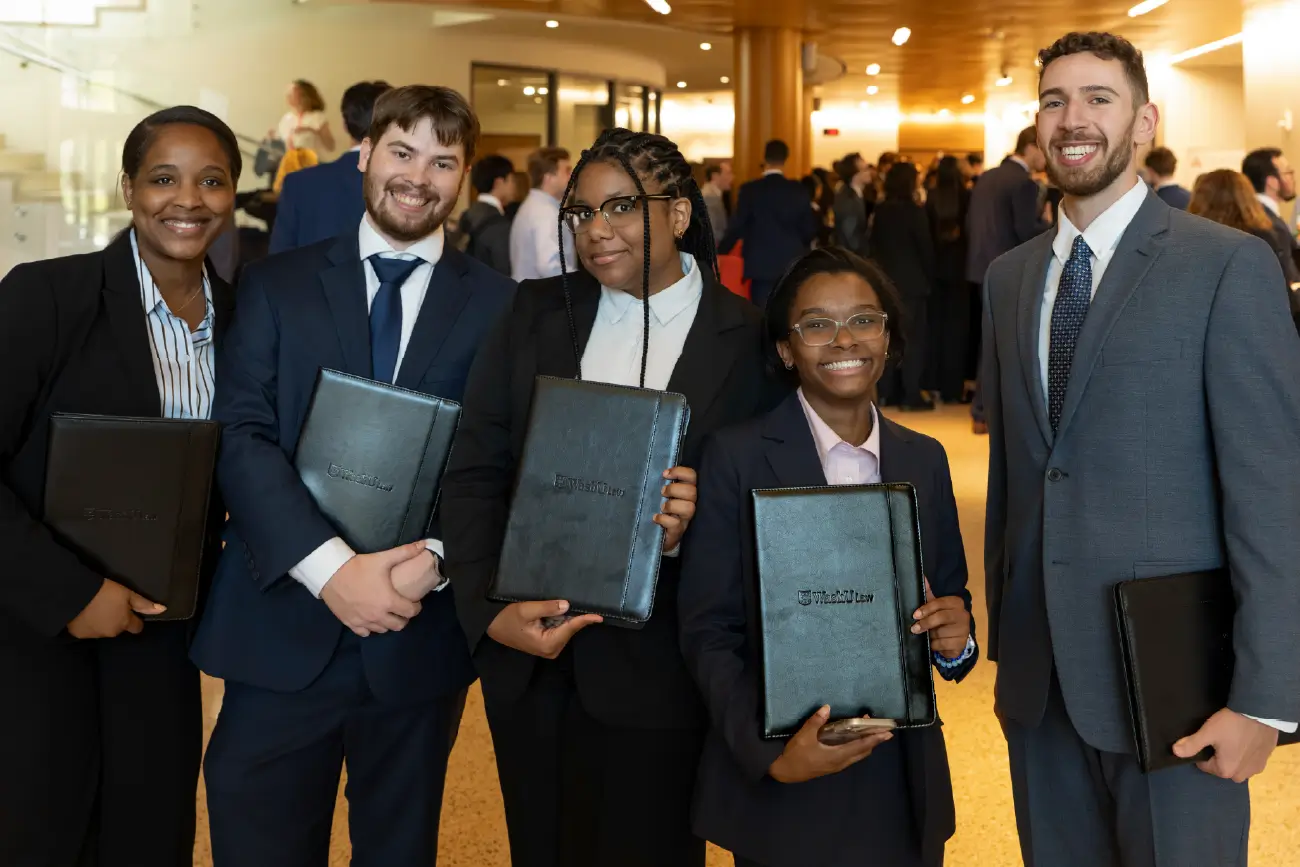
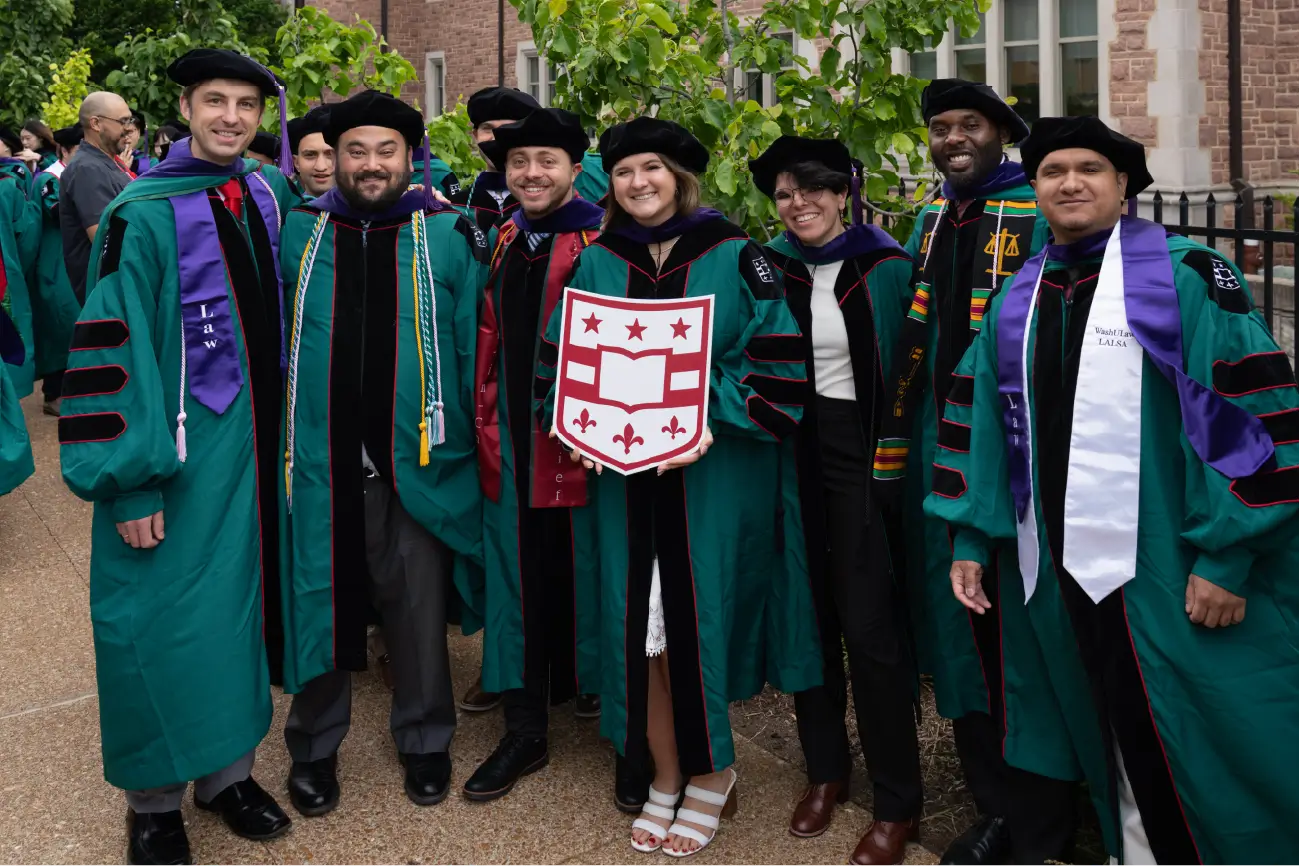
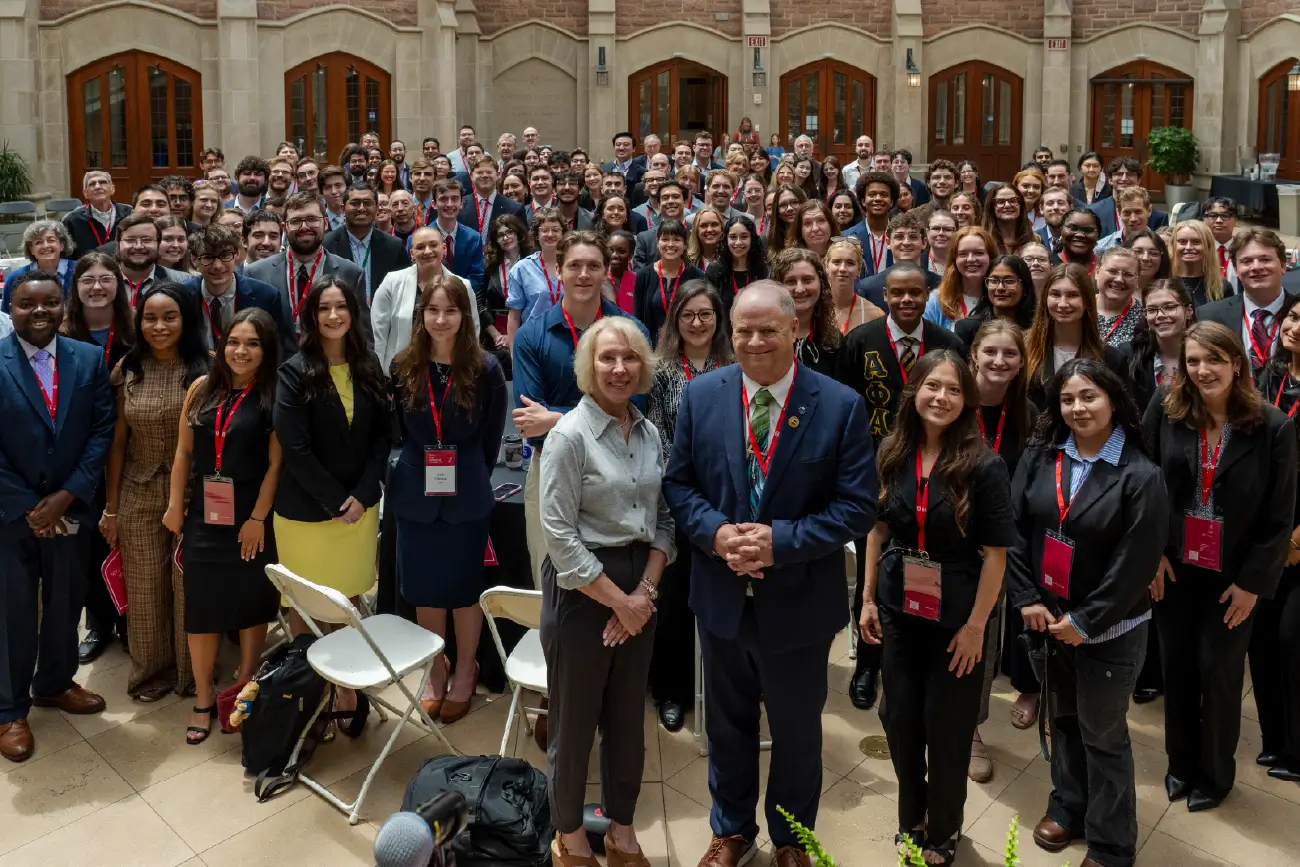
When Valeska Kubiak, a University of New Mexico undergraduate, arrived at WashU Law in St. Louis this spring, she did not know what to expect. She had been selected as one of 110 delegates from universities across the country to participate in the 2026 Model Constitutional Convention, the only national, student-led simulation dedicated to the process of re-imagining and amending the U.S. Constitution.
What she found surprised her.
“I did not anticipate how fun and collaborative it would be,” Kubiak said. “I expected it to be very formal, and I was nervous about needing to be professional and perfect the entire time. Instead, there were many moments of laughter, teamwork, and people helping one another learn procedures like Robert’s Rules of Order.”
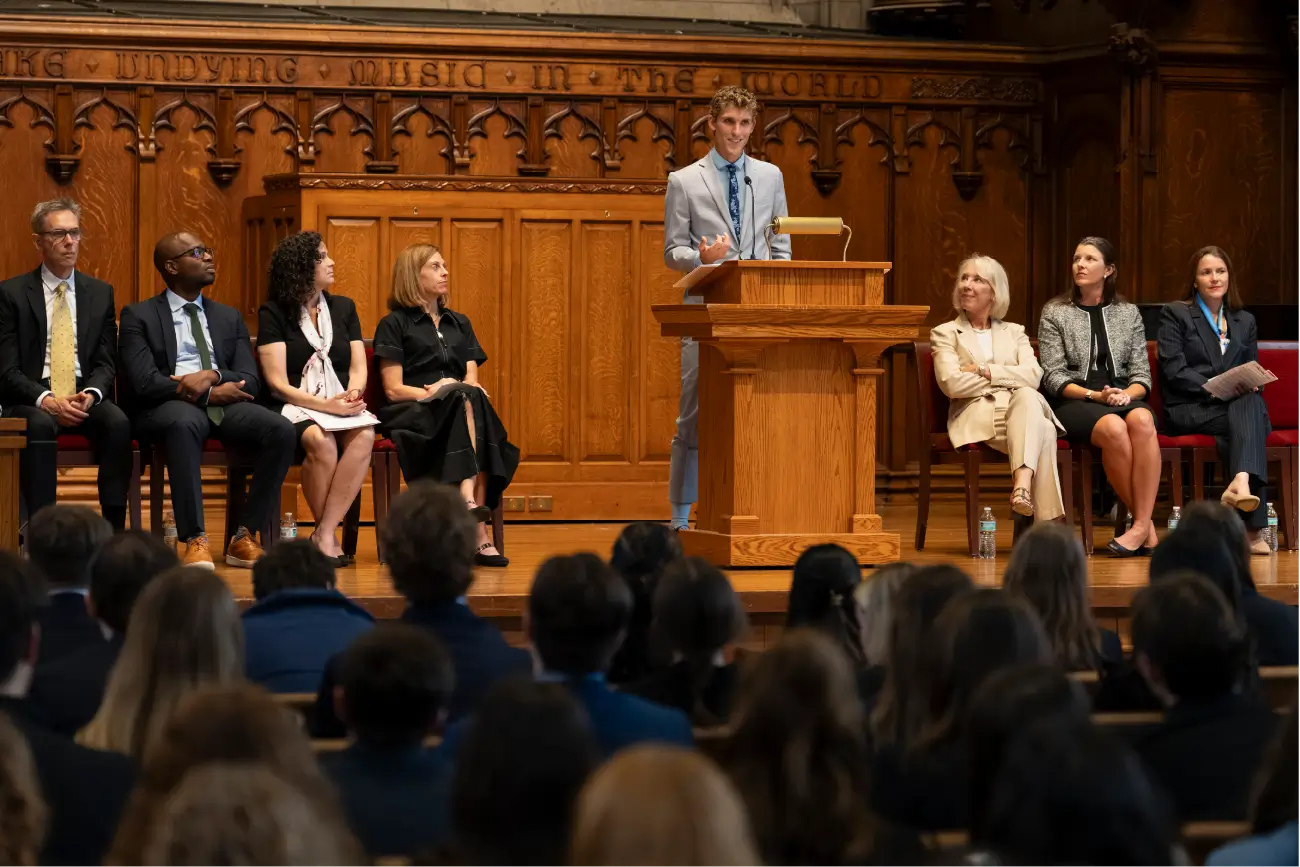
Held over Memorial Day weekend in May at WashU Law, the 2026 MCC brought together undergraduate and law students from across the United States to simulate a constitutional convention. Working in ten committees of eleven members, delegates stepped into the roles of state representatives who were responsible for proposing, debating, and ultimately voting on constitutional amendments at a plenary, which was presided over by elected student leaders. Twenty amendments were actively debated, and several passed, on issues including gerrymandering, eminent domain, and digital privacy.
The event was founded by Stefanie Lindquist, Nickerson Dean and Professor of Law at WashU Law, who co-authored with MCC Director Neta Borshansky a law review article detailing the MCC model. Dean Lindquist founded the MCC with the ultimate goal of preparing our current generation of students to become future leaders. “This generation is full of ideas and energy about societal change. My hope is that the MCC model showcases the U.S. Constitution as a vehicle for that change and helps to educate students on the processes and procedures for engaging in productive civic discourse.”
The 2026 convention marked the second MCC. The first was held in 2024 at Arizona State University’s Sandra Day O’Connor College of Law, which continues as a partner institution alongside the University of Texas at Austin School of Law’s Program on Constitutional Studies. This year’s event featured constitutional scholars Erwin Chemerinsky of UC Berkeley School of Law, Richard Albert of The University of Texas at Austin, and Justin Weinstein-Tull of Arizona State University School of Law as guest speakers. Chemerinsky spoke of compromise in the constitutional amendment process, Albert spoke about the role of AI in constitutional design, and Weinstein-Tull shared his vision for cultivating constitutional imagination and productive dialogue through the MCC.
Borshansky, who has dedicated her own career to the intersection of law, education, and public service, also worked on the inaugural convention with Dean Lindquist. She described watching delegates find their footing as one of the program’s most meaningful outcomes. “I’ve witnessed many students step out of their comfort zone, find their voice, learn to respect differing viewpoints, and come away from the MCC with a clearer sense that they want to contribute to our democratic system of government in some way.”
For Kubiak, who grew up in Alburquerque, NM, the experience offered something she did not expect to leave with: a hopeful perspective on our society.
“The MCC reminded me that people are often less divided than they may appear in media or political rhetoric. When people come together in good faith, engage in civic dialogue, and are genuinely willing to listen, meaningful discussion and compromise are still possible.”
She credits the structure of the convention and the faculty and peer mentors who guided it with creating the conditions for that kind of dialogue to happen. Faculty members came from law and political science departments at schools around the country, and peer mentors were students who returned after participating as delegates in the 2024 MCC. “The mentors genuinely wanted to teach and support us rather than simply observe and critique us,” she said. “It felt less like a showcase of our abilities and more like a collaborative learning experience where everyone was invested in helping one another succeed.”
Kubiak said the connections she made across geography and background were among the most meaningful parts of the experience.
“I had conversations with people from places and backgrounds very different from my own and made genuine friendships,” she said. “Despite differences in politics or geography, people were respectful, thoughtful, and genuinely willing to listen to one another.”
The Model Constitutional Convention is supported by the John Storr Fund and the Frick Initiative at WashU. The next MCC is scheduled for 2028. Read more at the MCC website, which includes a short documentary about the event.