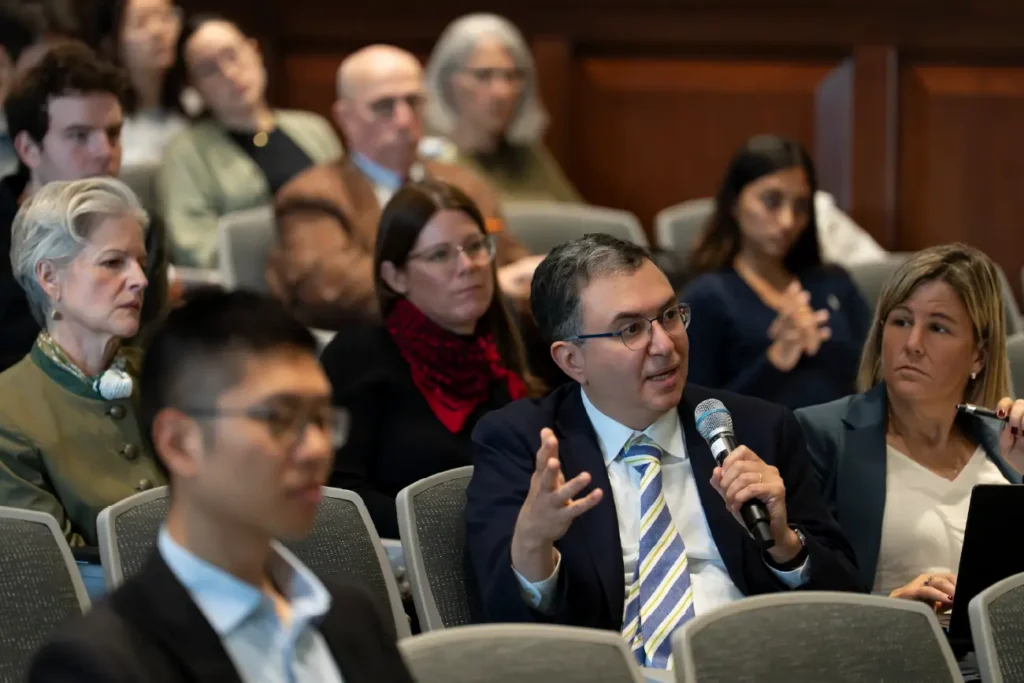
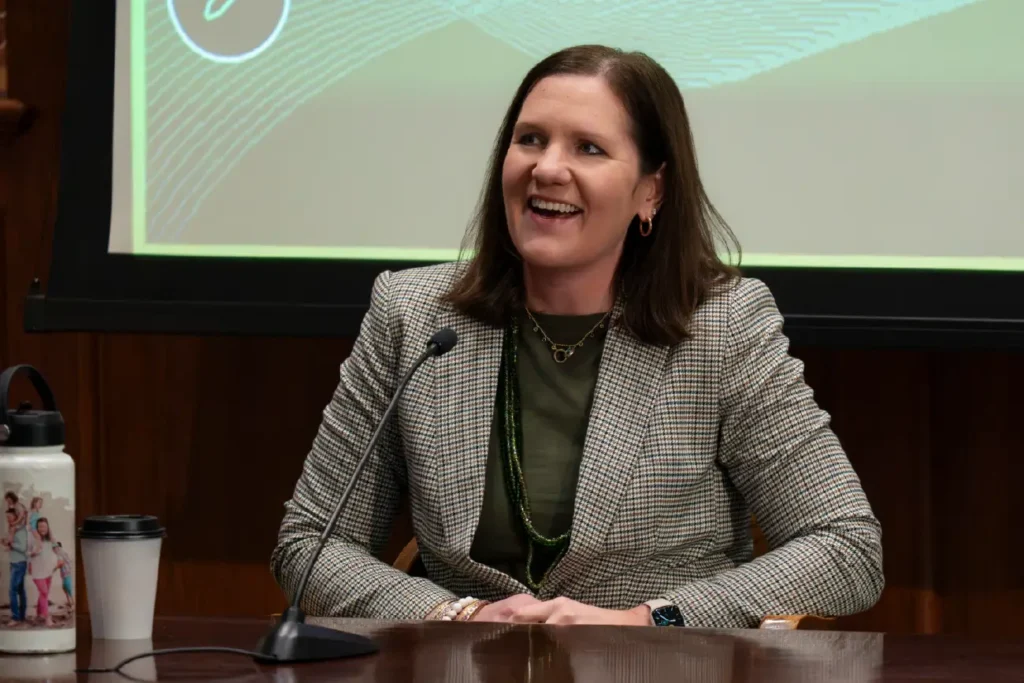
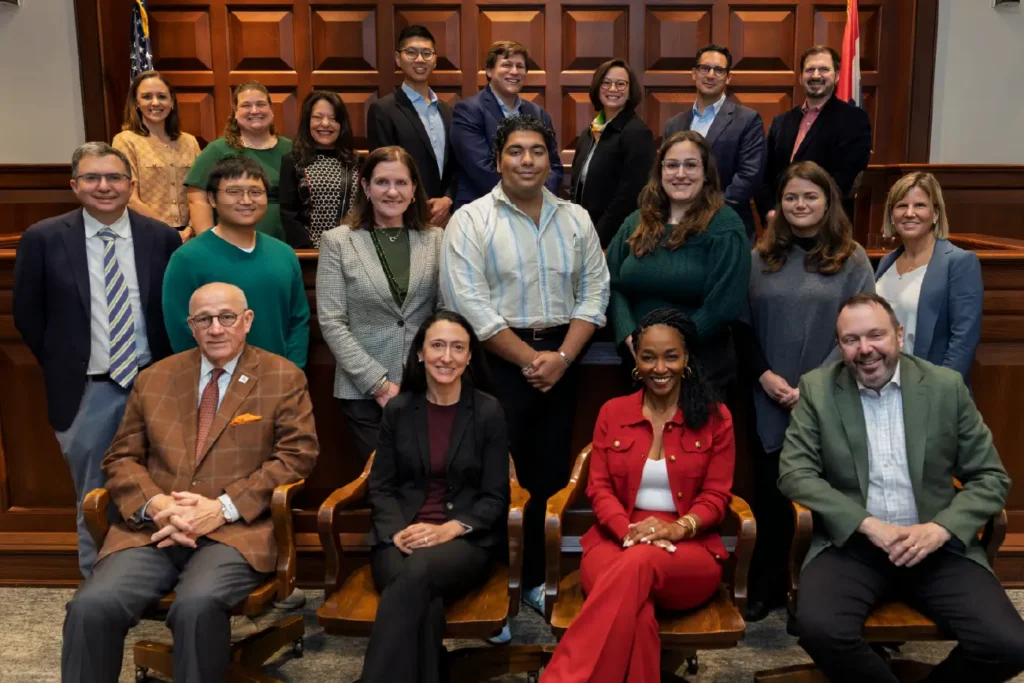
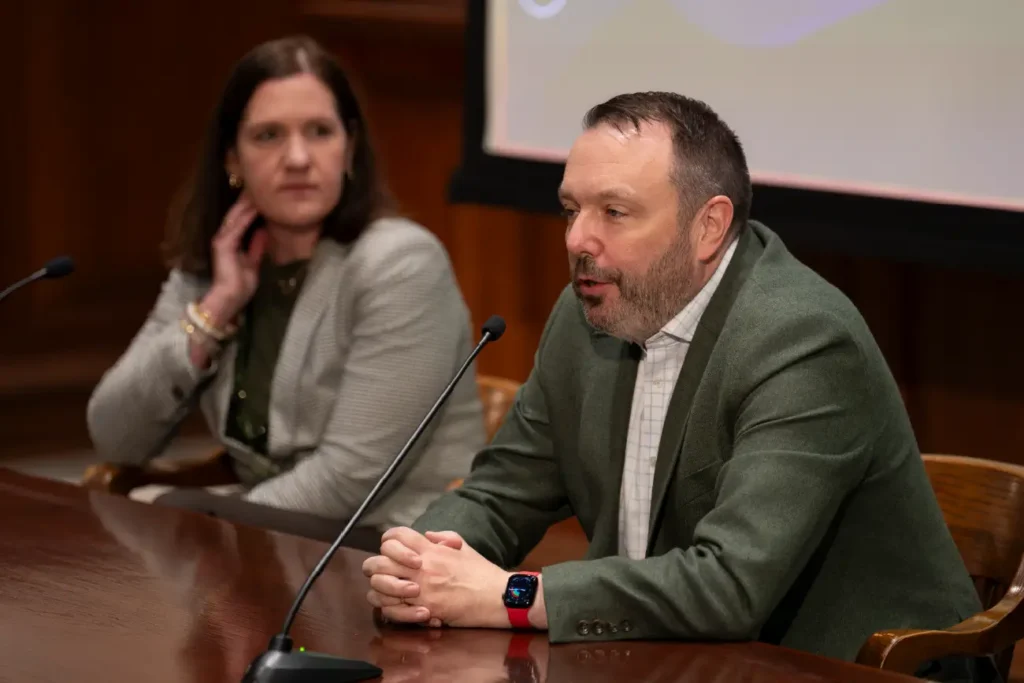
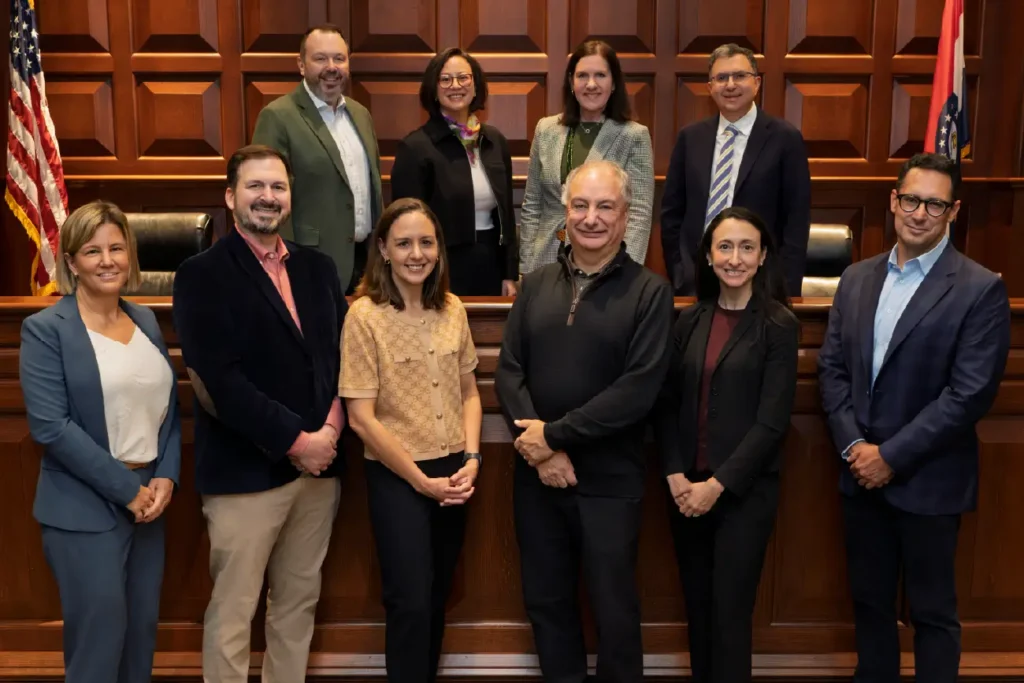
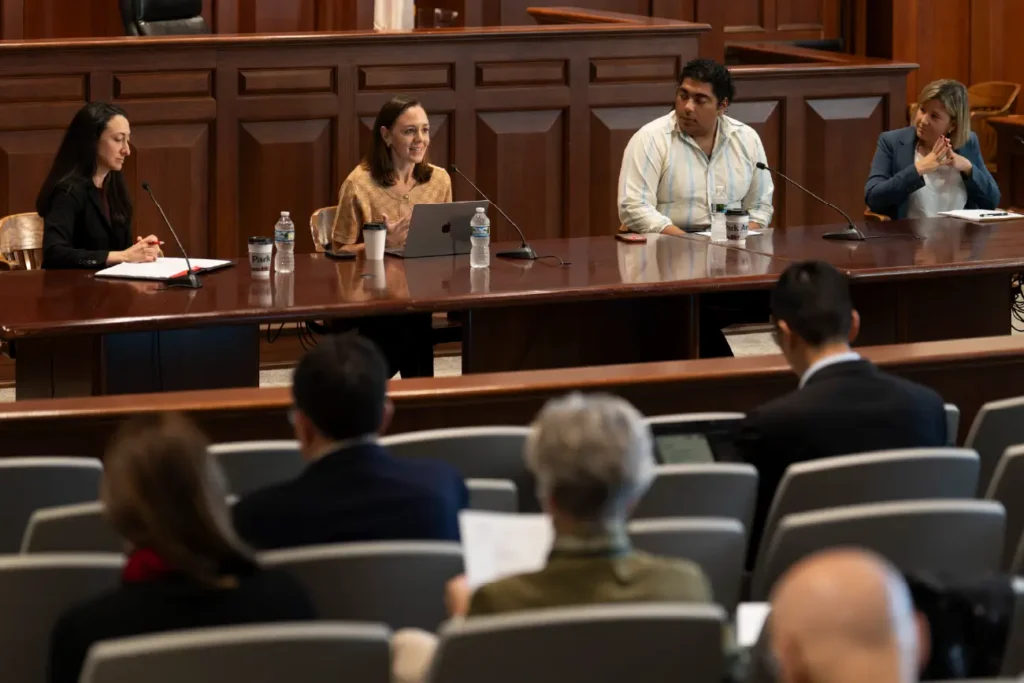
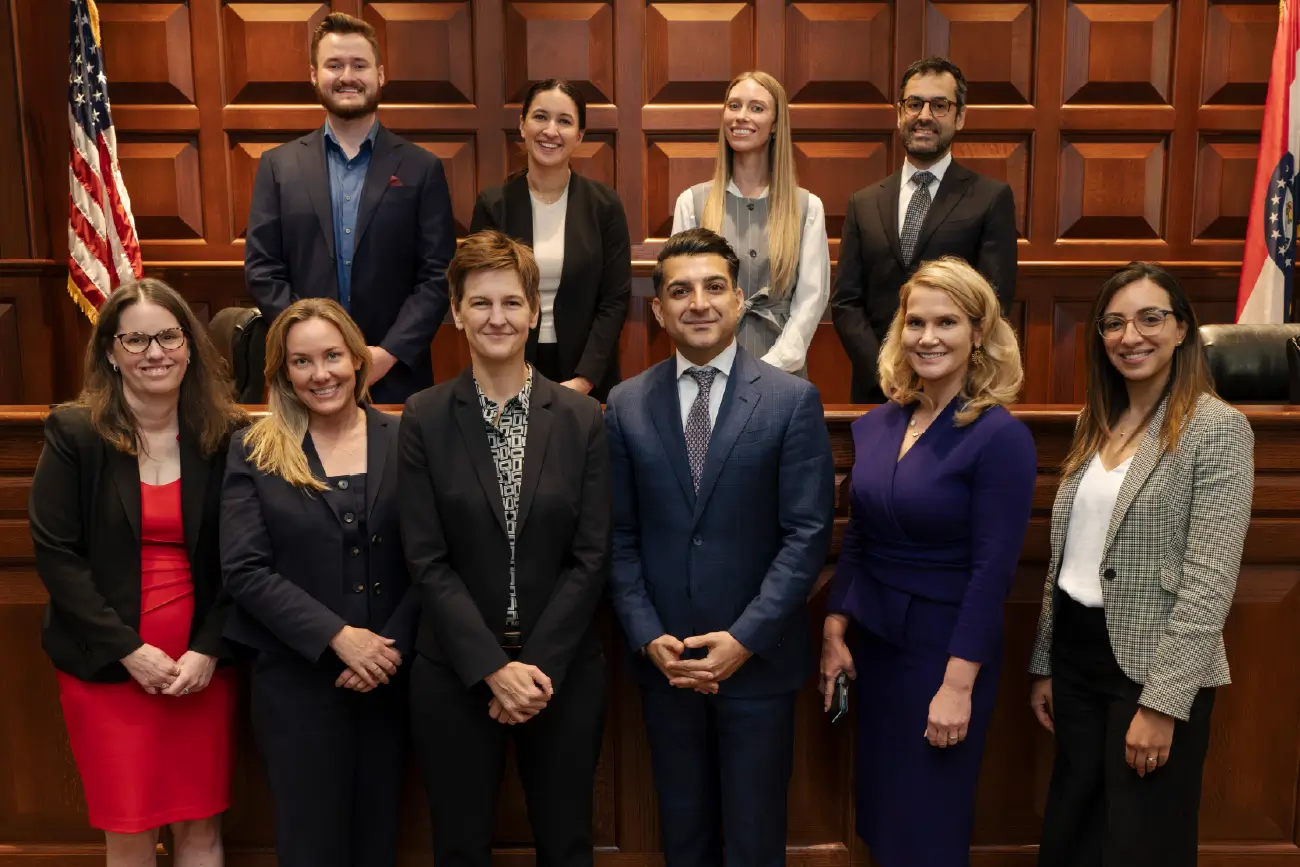
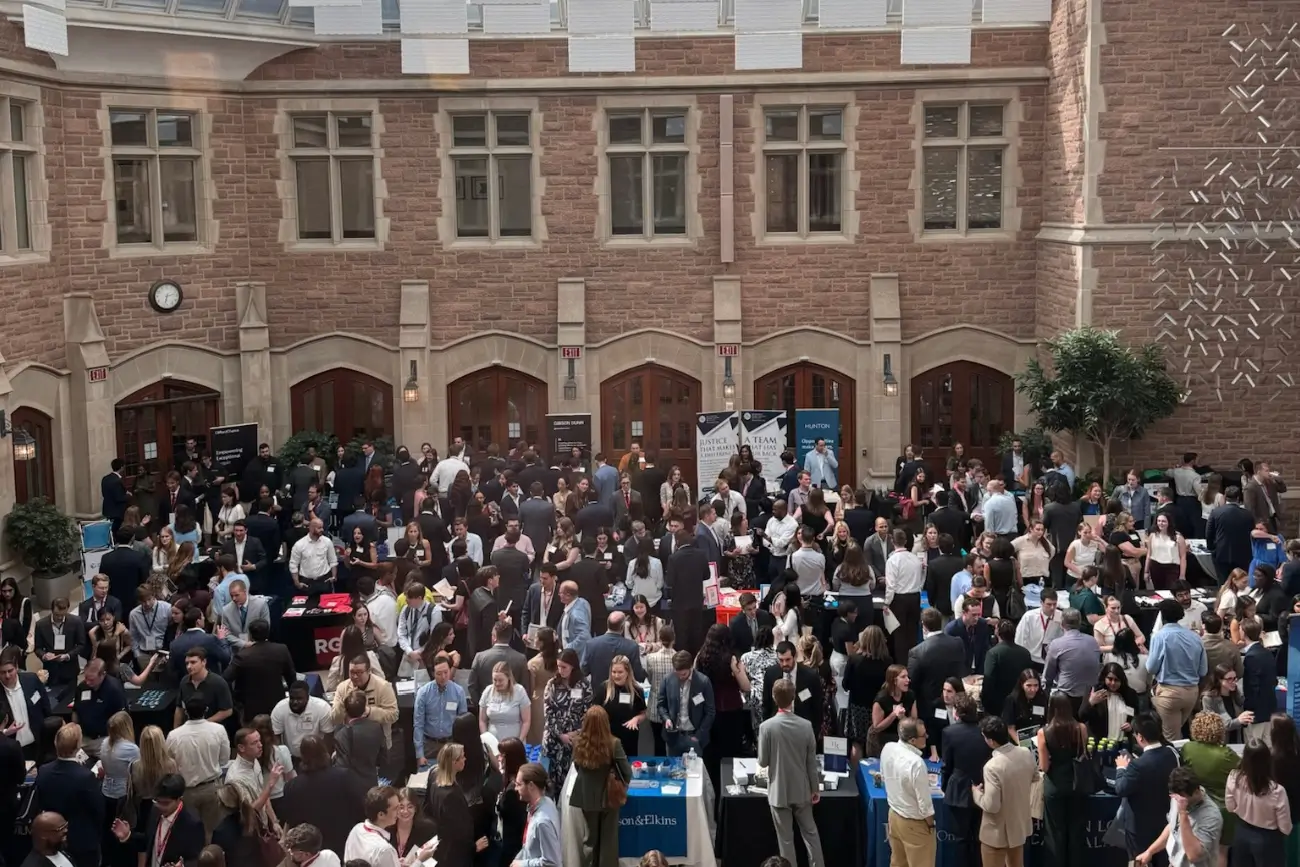
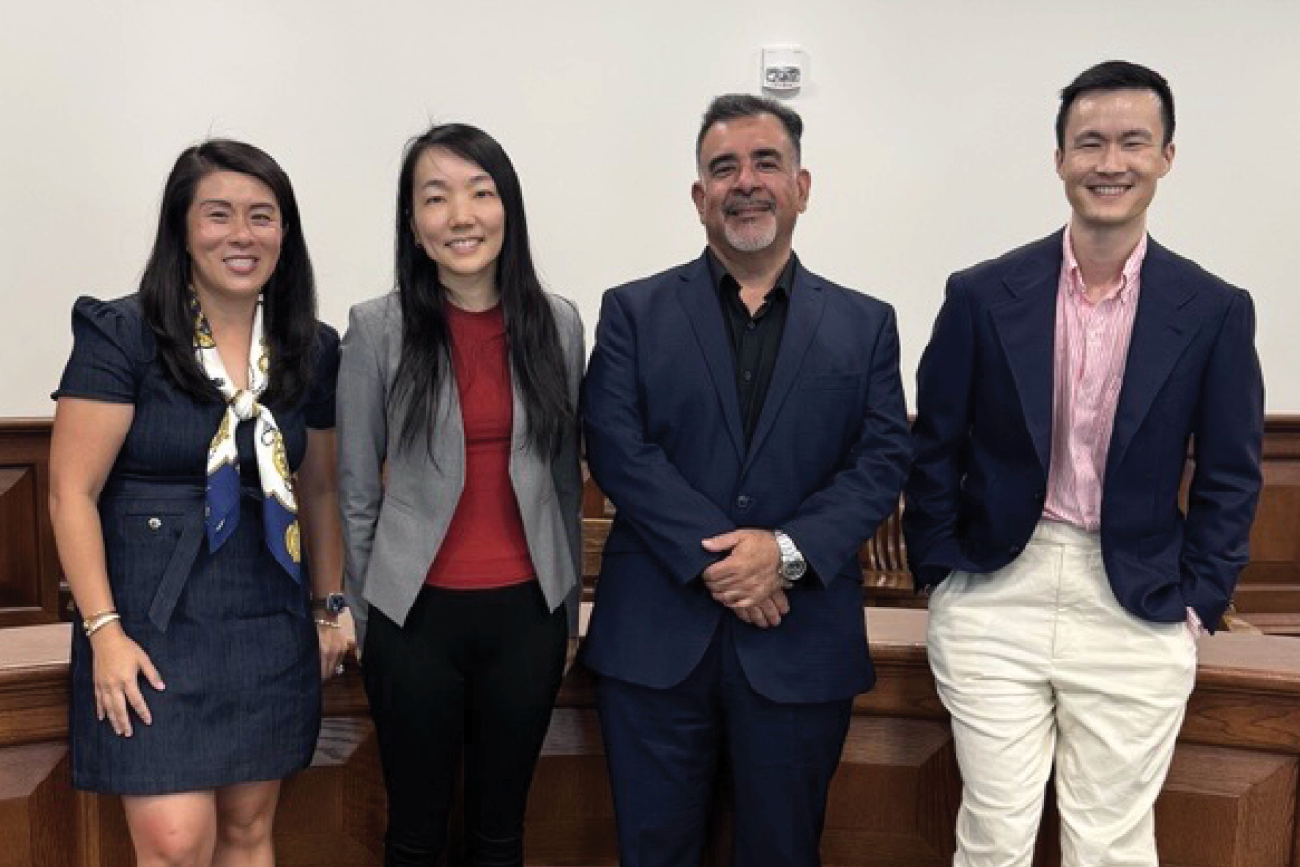
WashU Law and The Cordell Institute hosted Cordell Convergence on October 16 in Bryan Cave Moot Courtroom, bringing together scholars, policymakers, clinicians, and practitioners to examine the changing landscape of evidence-based policymaking.
The conference explored emerging issues at the intersections of law, medicine, data, technology, and ethics, with discussions focused on federal health agencies, digital technology, vaccine policy, and the future of evidence-based policymaking.
Former FTC Commissioner Opens Conference
The conference opened with “Diagnosing the Moment: The Shifting Landscape of Evidence-Based Policymaking,” featuring Rebecca Kelly Slaughter, former commissioner of the Federal Trade Commission, in conversation with Neil Richards, Koch Distinguished Professor in Law at WashU Law and faculty co-director of the Cordell Institute for Policy in Medicine & Law. The session examined what has changed in evidence-based policymaking and why those changes matter.
Panels Examine Health Policy, Technology, and Scientific Expertise
The conference continued with the first panel “Consequences and Tensions: Examining the Impact on Federal Health Agencies, ”featuring Patricia J. Zettler, John W. Bricker Professor of Law at The Ohio State University’s Moritz College of Law; Jennifer Layden, associate dean for practice and professor at WashU’s Bursky School of Public Health; and Anil Oza, a general assignment reporter at STAT. Rachel Sachs, Wiley B. Rutledge Professor of Law at WashU Law and faculty co-director of the Cordell Institute, moderated the discussion.
Woodrow Hartzog, Andrew R. Randall Professor of Law at Boston University School of Law, presented the lunchtime keynote “Uncomputable: How to Build a Decent Digital Future,” examining questions surrounding technology and the future of digital life.
The event also addressed the practical implications of evidence-based policymaking through “Convergence in Practice: Vaccine Policy as a Case Study.” Speakers included Caitlin McMurtry, assistant professor at the Brown School and co-lead of the Advocacy and Global Health EXPLORE Pathway at WashU Medicine; Dr. George Hoganson, assistant professor of pediatrics (emergency medicine) at WashU Medicine; and Richard Hughes IV of Epstein Becker & Green. Richard Cote, Paul and Ellen Lacy Professor of Pathology at WashU Medicine and faculty co-director of the Cordell Institute, moderated the session.
Experts Consider the Future of Evidence-Based Policymaking
The day concluded with “Future Directions: Strengthening Evidence-Based Policymaking,” which considered what lies ahead and what changes may be needed to strengthen evidence-based approaches to policy.
The panel featured Joshua M. Sharfstein, vice dean for public health practice and community engagement and distinguished professor of the practice at the Johns Hopkins Bloomberg School of Public Health; Kirk J. Nahra, partner and co-chair of the artificial intelligence and cybersecurity and privacy practices at WilmerHale; and Tara Ramanathan Holiday, vice president of legal at b.well Connected Health. Professor Neil Richards moderated the discussion.
Congratulations to Cordell for organizing a successful event, and thank you to all who contributed to a day of interdisciplinary discussion and collaboration across fields shaping law, medicine, and public policy.