The Whitney R. Harris World Law Institute hosted their annual Arbitration and Dispute Resolution Symposium on October 9, bringing together legal experts to explore the evolving practice of international arbitration.
Titled “Arbitration at the Frontier: Courage, Craft, and Technology,” the symposium featured a keynote presentation and two panels examining procedural innovation, effective advocacy, and the opportunities and challenges of artificial intelligence in dispute resolution.
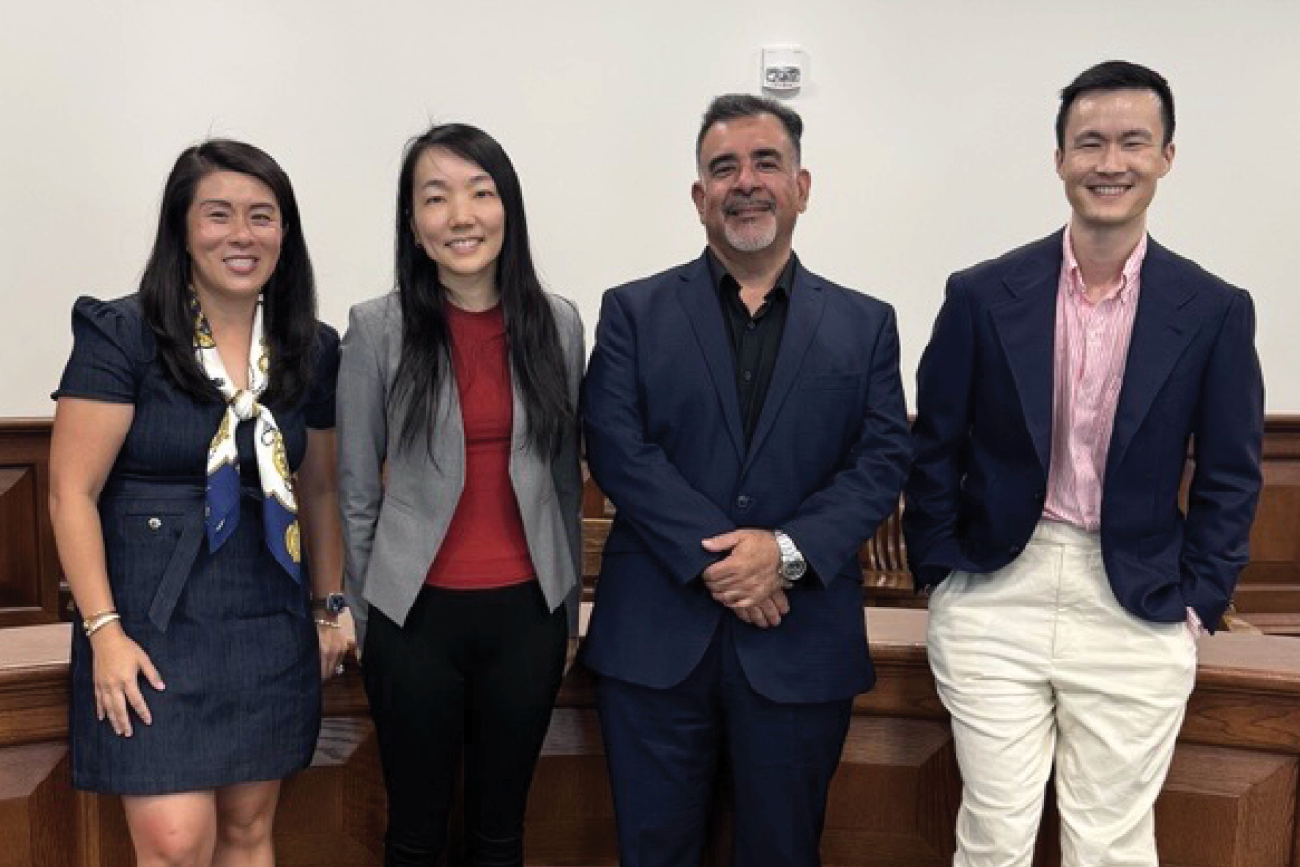
MJ Durkee, William Gardiner Hammond Professor of Law and director of the Whitney R. Harris World Law Institute, and M. Imad Khan, JD ’11, partner and vice chair of international arbitration for the Americas at Winston Taylor LLP, served as co-chairs and organizers of the event.
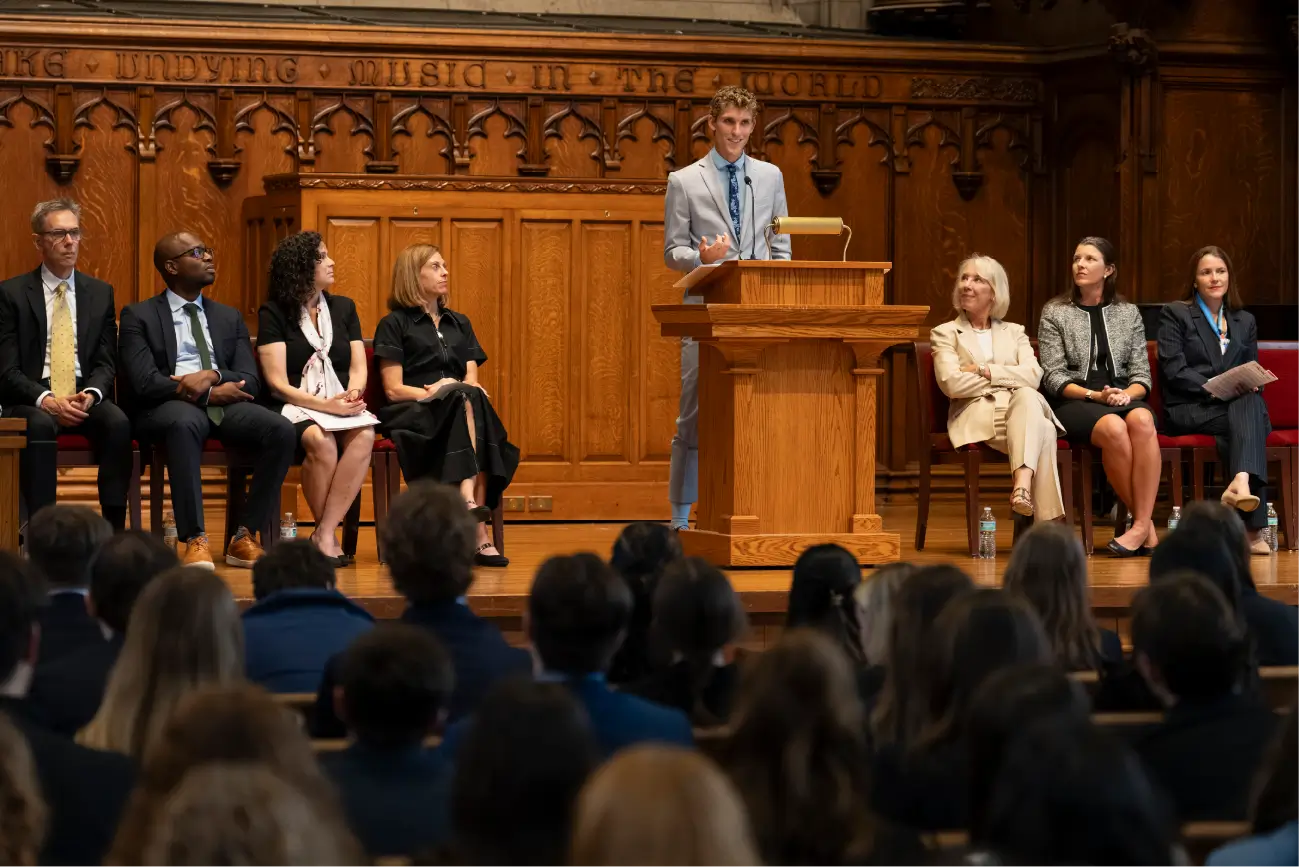
The symposium opened with a keynote by Sarah Vasani, titled “Breaking Due Process Paranoia: The Case for Procedural Courage in International Arbitration.” Drawing on empirical research and her experience as counsel and arbitrator, Vasani explored how arbitral tribunals can exercise greater procedural discretion to reduce the time and cost of proceedings while maintaining due process.
The first panel, “The Future Is Here: Effective Written and Oral Advocacy in International Arbitration,” examined the skills and strategies that make advocacy persuasive throughout the arbitration process. Speakers Kathleen Barry, Sarah Reynolds, and Sarah Vasani joined moderator Olga Pototskaya to discuss effective approaches to procedural conferences, document production, written submissions, and oral hearings.
The second panel, “Use of AI in International Arbitration: Tool, Risk, or Decision-Maker?” explored AI’s growing role in legal research, document review, witness preparation, damages analysis, and decision-making. Speakers Alejandra Barros Noriega, Tiago Duarte Silva, and Joseph Padjune joined moderator Natalie Swatowski to consider the practical applications of AI, the risks it presents, and its implications for due process, party autonomy, and the legitimacy of arbitral decisions.
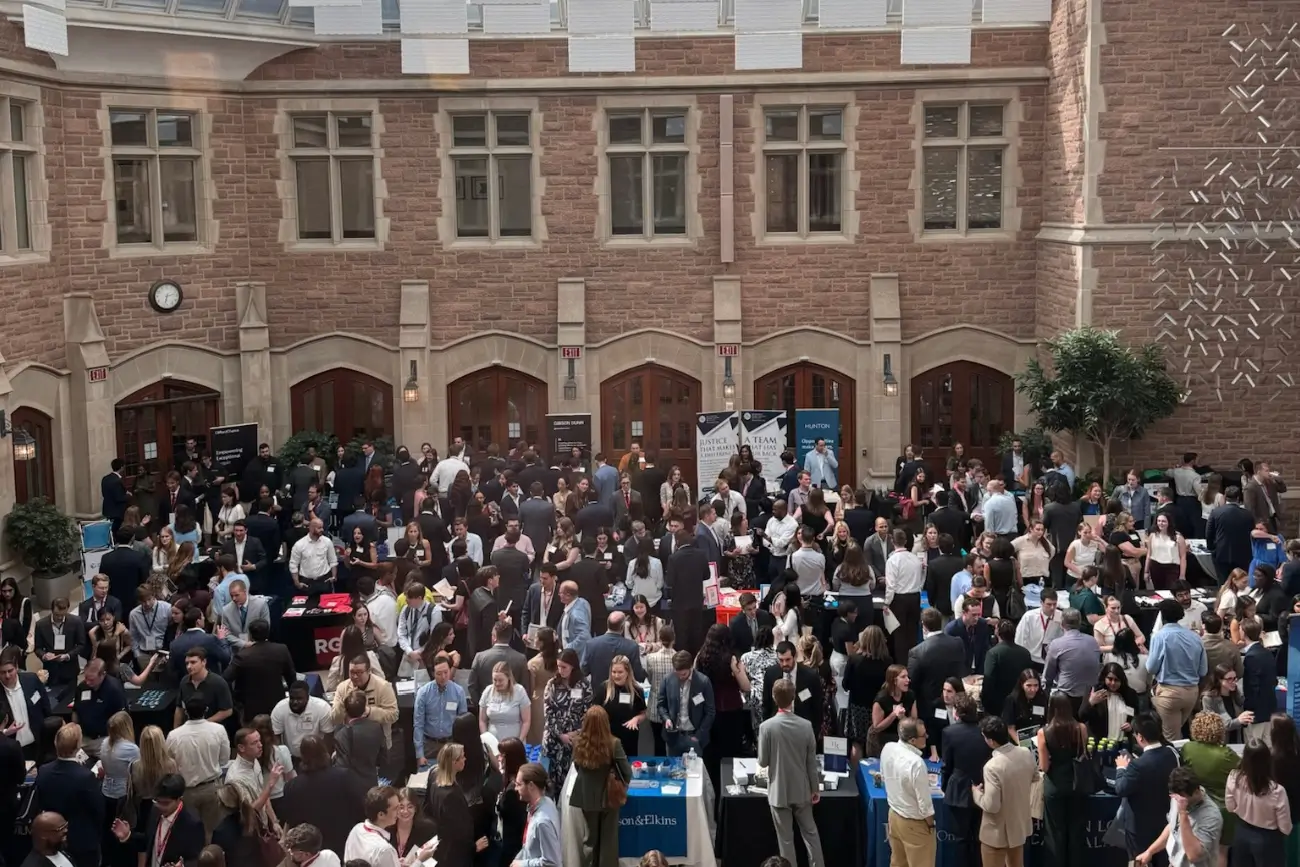
The symposium concluded with a reception in the Janite Lee Reading Room, offering attendees an opportunity to continue the conversation and connect with fellow participants.
Thank you to all the speakers, moderators, attendees, and participants who contributed their expertise and perspectives to this year’s symposium. The Harris Institute thanks co-chairs and organizers Professor MJ Durkee and Imad Khan, along with event sponsors the Negotiation and Dispute Resolution Program at WashU Law, and Charles River Associates for helping make the event possible.